Category: Modernizing Your Contact Center Blog

  • Best Practices for Quality Management in the Contact Center

    Best Practices for Quality Management in the Contact Center

    It’s 2021. It’s been tough to attract and retain talent. It is more critical than ever to ensure that you have a quality program in place. Whether you are onboarding new agents or ensuring that tenured agents are providing the best level of service, quality is important.

    Creating Scorecards – What Makes a Great Interaction?

    The first step in quality management is creating a score card. This is a tool that can be leveraged to provide consistent and standard feedback to agents when reviewing a contact. What makes a great scorecard? You need to determine what is important in the interactions. What drives customer satisfaction and first contact resolution? Things to think about here are the following behaviors:

    • Soft-skills: What soft skills should the agent display when speaking with customers? Were they empathetic, friendly? Did they show the proper emotion for the situation?
    • Process: Did they follow the correct process for the question or inquiry that the customer was asking about. Also, when thinking about various different channels, you may want agents to used canned responses or quick replies for digital contacts to preserve time. You want to ensure that agents are not asking customers to repeat themselves if the customer provided the information in the IVR.
    • Security & Compliance: Did the agent follow all security and compliance requirements. Did they authenticate the caller if needed. Did they remain PCI compliant?
    • First Contact Resolution: Did the agent own the issue and correctly answer the customer’s question? Did they offer additional assistance to prevent additional contacts?

    Determining Frequency of Feedback

    After you have the scorecards created, you have to determine how often you will be providing feedback and coaching sessions to the agents. How many Evaluations will you perform for each agent in a set period of time. When using quality platforms, you can create plans that help you complete this for each agent. With more advanced quality management platforms, you can filter the contacts that are fed into the plans based on attributes such as sentiment, categories, duration of calls and even keywords.

    As you think about how many contacts to evaluate per agent, a one-size approach may not make sense. For example if an agent handles multiple channels, you may want to consider a minimum number of evaluations per channel. This will enable you to ensure that the agent is providing a consistent great experience across multiple channels. A new agent or an agent that may not performing to standards should have more evaluations done with an agent performing to standard. This will ensure that you provide more coaching to those that need more development. Sometimes I have seen agents that are performing to a certain level getting a minimum number of evaluations each month whereas those that are under the threshold get feedback on a daily or weekly basis.

    Coaching Sessions

    Determine how often you provide coaching sessions to agents. Ensure that they are getting feedback on a regular basis. In addition, you may want to provide an agent the opportunity to self-evaluate prior to the session. This will provide a great opportunity for the agent to identify areas of improvement and areas they excelled at as well as provide a basis of conversation during the coaching session. Provide a mechanism fort the agent to be able to contest their score if they don’t agree with the score. This will provide an opportunity for someone else to evaluate the contact and either uphold the evaluation or change the evaluation based on re-reviewing. Having consistent coaching sessions will enhance the employee experience which ultimately will help with retention and customer experience.

    Calibration Sessions

    Calibration sessions are critical to ensure that the quality program is accomplishing its goals and there is consistent scoring. This is where multiple stakeholders (agents, supervisors, managers, business stakeholders) come together and listen to or look at the same contact. This ensures consistency in scoring. If there are inconsistencies or disagreements on how to score a contact, they can be discussed during the calibration session and procedures may need to be updated. This also builds awareness on ratings and also highlights if there are changes needed to the scorecard. With some of the nuances in scorecards associated with weighting, oftentimes those nuances are highlighted either in the review of contested scorecards or calibration sessions. Calibration sessions should be held at least once per month.

    Use Data to Track Impact

    As you start your quality monitoring program, you will want to track the quality of calls over time. Things to track include the impact of the quality program on employee satisfaction scores. Employees should become happier by having meaningful coaching sessions on a frequent and regular basis. This should also result in higher employee retention. Your agent tenure should also go up due to agent retention increasing. Customers should be happier with getting better service. This should be reflected in customer satisfaction scores. First contact resolution should also be higher.

  • How to Prevent Contacts Before They Get to Customer Service

    How to Prevent Contacts Before They Get to Customer Service

    I often get asked what an ideal contact center looks like. I used to answer “An ideal contact center would be one where there wasn’t any contacts…at all.” However, I have shifted in my thinking. Sometimes, you want customers to contact you in order to build or deepen the relationship. It doesn’t always need to be over the phone, it could be across a number of different channels. However, customers should have the opportunity to self-serve through multiple different channels. Oftentimes, the contact center addresses friction in the customer experience. While, it isn’t realistic to think that we will get to no customer service contacts, there are steps you can take to reduce the number of contacts coming into your customer service organization while maintaining or improving customer satisfaction.

    Strategy #1: Have a robust customer facing knowledge-base/self-service portal

    88% of customers expect a company to have an online self-service portal. In fact, 65% of customers prefer self-service for simple inquiries. A robust knowledgebase is critical as part of your self-service strategy. Some of the critical capabilities that I looked for when I managed the knowledge and self-service aspects in the contact center included:

    1. Knowledge Search – Having intelligent, contextual search engines that were included federation. Making the knowledge readily available and easy to find is critical.
    2. Knowledge Creation – Having a simple interface to be able to create content. Version control and the capability to support multiple media types including videos and pictures was critical.
    3. Have troubleshooting flows – Having decision trees in the knowledge bases enable customers to troubleshoot .
    4. Robust analytics & reporting – Gain insights on the number of people leveraging the knowledge articles. Understand what the next step was after they consumed the content. This will enable you to understand whether the article was helpful. In addition, providing the customer with an opportunity to rate knowledge articles is also insightful.

    Strategy #2: Provide Self-Service across your contact center channels

    I was surprised with some of the latest cost per contact data from Benchmark Portal this year. For the first time since I started looking at the data, the cost per chat was more expensive than the cost per voice call. This was very surprising, but it got me thinking. How many companies are deploying web chat without a self-service strategy? We have mastered self-service in the IVR. There are many benefits of webchat including the asynchronous manner and the capability for agents to handle more than one chat at a time. However, deploying chat without a self-service strategy such as a bot can be detrimental to the success of your channel strategy. Bots (preferably conversational AI bots) should be deployed across your digital channels to help with your self-service and deflection strategy.

    Strategy #3: Leverage Analytics to Understand the Reasons for Contact and Reduce Customer Friction

    Interaction analytics is one of my favorite contact center tools. However, it is not just for contact center staff. This tool takes a plethora of unstructured data and converts it to structured, actionable data. Leveraging the data you get from interaction analytics to identify customer friction across the customer lifecycle is critical to driving out friction and ultimately reducing customer service contacts. I would encourage contact center managers to architect their analytics to enable transparency across the organization. Ideally other divisions could leverage analytics to understand how to improve their areas whether it is product, marketing, sales, supply chain, etc to reduce friction and eliminate contacts.

    These are just three areas to focus on to increase self service and decrease contacts coming into your contact center. I would encourage you to look at reporting on each of these areas and continue to focus on contact deflection as one of the key areas in your contact center. I had a group that focused on this and were measured by the percentage of contacts deflected. What other ways are you deflecting or preventing contacts from coming into your customer service organization?

  • Should Customer Performance Indicators (CPIs) be the New KPIs?

    Should Customer Performance Indicators (CPIs) be the New KPIs?

    When we think about key performance indicators in the contact center, I am starting to think we have it all wrong. We talk about the maturation of the contact center – moving from a call center to a contact center to a customer experience center. While we have reimagined the customer experience in the call center, it is time to reimagine the metrics that come along with reporting. Should customer performance indicators (CPIs) be the new performance standards for the customer experience center?

    The Birth of the Call Center

    When I started my career, call centers were considered a necessary part of every business where customers could call in and ask for help on their specific inquiry. The IVR was often an auto-attendant – redirecting the call to a specific department. As the call center matured, so did the IVR. There began to be a focus around self-service and deflection – getting information from back-end systems to provide to the caller. Then customers began to email the call center. A call center was no longer just a call center, but rather was beginning to become a contact center. We weren’t thinking about queuing anything more than just calls, but were starting to think about how we organized groups to handle calls vs. emails. Typically we had a phone group and an offline group handling emails and manual orders.

    From Call Center to Contact Center

    With the adoption of e-commerce, web chat started emerging as a new channel. Most often, phone was handled by one group and chat/email was handled by another group. When the smart phone emerged in the early 2000s – social media also started to be introduced. We quickly realized that social media wasn’t only for personal communication, but we needed to use it for business communications as well. Social Customer Care groups were created to address this need.

    Additional channels were introduced. We also started learning about the value of the relationship and a great experience in the contact center. When a customer had a poor customer experience with the company, they started using social media to tell their friends (and the rest of the world). We started shifting our thinking. We can’t afford to continue to look at average handle time as the primary KPI for agent performance in the contact center. Call centers needed to get less rigid about call scripts so that agents didn’t sound so robotic and well…scripted. Customers wanted to be able to interact with the agents and have a conversation.

    Over the course of the last decade, we have realized that we need to have a cohesive approach when it comes to responding to customer inquiries across all channels. Customers may start a conversation in one channel and move to another channel. The conversations need to be threaded across channels. We also realized the value of customer satisfaction. The agent had an impact on overall customer satisfaction which ultimately had an impact on revenue.

    From Contact Center to Customer Experience Center

    We now believe that the contact center is more than just an organization that reacts to customer inquiries. It can add overall value to the organization. It can even be considered an extension of marketing. The goal of the customer service organization is not only to reply to contacts, but to be proactive and customer focused. The contact center can enhance the relationship with the customer. Contact center management has stopped coaching agents on average handle time and adhering to strict scripts. Customer Service organizations are starting to be considered strategic partners in the organization. The data they have and the advanced applications enable better insights into the customer journey. The contact center can identify customer friction throughout the organization and show ways to reduce customer friction.

    Why Traditional Call Center KPIs Don’t Make Sense

    What are the top call center KPIs? The main ones are Abandon rate, average speed of answer, average handle time, transfer rates, average handle time, service level and first contact resolution. There are so many variables that go into each one of these KPIs. When I was working in a contact center, I had so many conversations on average handle time and the variables of the day, week or month that was driving AHT. It could be a new change on the website would drive more calls and drive higher AHT as the calls were more complex than usual. Minor variations into these KPIs typically did not impact overall customer satisfaction.

    What drove customer satisfaction? Quick resolution time, being able to get their question/issue handled and knowing that the agent cared. There are a whole new set of tools that we need to consider the impact to overall customer satisfaction and ultimately company profitability. AI infused routing to get the contact to the best matched agent, analytics to identify upstream friction (so that we can eliminate it), customer sentiment detection are all fairly new to the contact center.

    As the systems mature, why haven’t we rethought analytics and performance metrics more? More people are thinking about the contact center not as operational overhead, but rather an extension of marketing. Customers drive company growth. How? Through social media, company reviews, word of mouth and much more. KPIs are company centric whereas CPIs are customer centric.

    CPIs You Should Consider Measuring

    Customer Effort Score – Unlike NPS which is company focused, Customer Effort Score is customer focused. While companies want customers to promote them, customers want companies to be easy and frictionless. Therefore, companies should move to CES to be more customer centric.

    Customer Sentiment – Companies should measure the ratio of contacts with positive sentiment vs. negative sentiment. Companies should make it a goal to have a very high ratio of positive contacts to each negative contact.

    Customer Reviews – Companies should track organic customer reviews. How many positive reviews vs. negative reviews does a company get?

    Customer Acquisition & Customer Retention Rate – How many new customers are you acquiring and what is your customer retention rate?

    Time to fulfill the customer’s desired outcome – How is the company performing compared to the customer’s desired outcome. This may be mean time it takes to provide a quote or the mean time it takes to resolve an issue once reported. If they have already ordered a product, it is mean time to fulfill the order.

    With all the advances in technology, it is time to rethink the way you measure your performance as a customer centric company. Saying you are customer centric is just the first piece of adding additional value. You have to perform as a customer centric organization – flattening the organization and focusing on the customer outcomes. Then, you have to measure how you are doing based on customer expectations. It is time to update those performance indicators to reflect your more modern customer-centric organization.

  • A Guide for Setting Up Your Contact Center After a Merger or Acquisition

    A Guide for Setting Up Your Contact Center After a Merger or Acquisition

    After an acquisition or merger, not only do you have to determine how to merge all the various business applications, you also have to determine what the future-state customer experience should be.  This includes merging the contact center experience.  You will likely have disparate phone numbers, email addresses, skillsets, IVR applications and reporting that you will need to review to determine best future-state design.  Here are some things to consider as well as best practices when merging companies from a contact center design perspective.

    How to Manage Phone Numbers & Emails after an Acquisition or Merger

    When determining what phone numbers to maintain after an acquisition or merger, the best practices include:

    • Understanding where the numbers or email addresses are published today
    • Understanding current volumes for the phone numbers or email addresses
    • Identifying any vanity numbers (Phone numbers that typically spell out words) and determining if you want to maintain vanity numbers. 
    • Are there any fax numbers that are published that may need to be updated? 

    How to Manage Phone Numbers & Emails after a Partial Acquisition or Merger

    • Transferring ownership of the phone numbers and email addresses to the acquiring company for the division being acquired with a definitive timeline associated with completion of the migration.  
    • The company that is being acquired should sign a letter of agency associated with all the phone numbers that were part of supporting this portion of the business and work with you on transferring ownership to the acquiring company. 
    • While the resporg is being completed, the acquired company should forward the phone numbers to a target phone number that is owned by the company that is acquiring the business.  This will enable the company to handle the call flows internally.  
    • If there are options in the acquired company that include the division that is being acquired, then an announcement should be played advising the caller when they choose that option of the new company and phone number.  Eventually the company that spun off the division should modify the IVR to remove those options (based on a mutually agreed upon timeline). 

    Once you understand the volumes associated with each phone number, you will need to:

    • Determine how you want to proceed with migrating volume to the parent company’s existing phone numbers.  This includes updating any marketing materials and websites to reference the phone numbers and email addresses that you have identified that you will be keeping.  
    • Once you have updated the websites and marketing materials, run usage reports and determine impact on volume of the old phone numbers.  
    • For a period of a few months, play a message that the phone number has changed and redirect the call to the new phone number. 
    • After a few months of playing the message and redirecting, play the message and disconnect the call. 
    • Continue to run call traffic reports on your toll-free numbers and disconnect when negligible traffic remains on the old numbers. If significant volume remains, ask the callers where they are getting the phone number from to see if there are additional areas where the number is published that you were unaware of.

    The same process should be completed for email addresses as well. 

    How to Handle Call Routing & The IVR After a Merger or Acquisition

    Evaluate the call routing for the acquired company and the skills the agents need  in order to handle the calls.  Call Routing should be designed for the best customer experience, not for reporting purposes.  Reasons for contacts can be captured at the disposition of the call (and not based on options in the IVR).  The IVR’s role is for identification, deflection (where it makes sense) and routing the contact to the correct group of agents.  As you are evaluation the routing, ensure that the IVR is designed to fit these needs. 

    For call routing purposes, you will want to do the following:

    1.  Identify any opportunities for self-service.  Are there opportunities to identify the callers in the IVR or offer self-service to deflect the calls
    2. Identify reasons that calls will need to be prioritized over other calls. 
    3. Determine skill groups of agents and who can take which calls
    4. Determine what integrations are necessary for the IVR and screen pops
    5. Once you have determined the skill groups of the agents, the priorities needed and the self-service that you can offer, you can start designing the to-be call flows.  These will likely be a combination of the old IVR of the company that was acquiring the new company with additional components incorporated of the newly acquired company.
    6. If there are functions that are significantly different from the existing business, it may make sense to have different call flows/applications to ensure a better customer experience
    7. Run reports on existing IVRs, skills, etc.  Are there some that are getting no volume and can be removed?  This is a good time to do a complete audit of what is built and clean up any unnecessary configuration. 

    How to Handle Other Channels During a Merger or Acquisition

    Evaluate what other channels you should service the customer on.  Is there a social media presence?  SMS texting? Web chat?  All of these channels should be evaluated and determine future state routing and responses.  Things to consider when migrating these additional channels include:

    • Any rebranding that needs to be completed for the chat design or templates
    • Any additional quick responses that need to be added to incorporate additional questions about the merger/acquisition or unique questions that may be posed based on the company being acquired. 
    • Determine skills that should be added to the configuration or if you can use existing skills based on the use case. 

    Additional Items to Address after a Merger or Acquisition

    Additional items to consider when you are acquiring a new company:

    1.  Are there additional components and information that you need to add to the knowledge base or agent training on new products/services as a result of the acquisition
    2. Determine if you will be maintaining any of the agent employees from the company that is being acquired?  If so, you will need to create a plan for onboarding and training. 
    3. Review and update your forecasts with the new volumes added in from the company being acquired.
  • Debunking the Myths of Work from Home

    Debunking the Myths of Work from Home

    After I had my first child, I had worked out a plan to work from home every Friday. I am grateful to my manager for trusting me and being forward thinking. However, there were skeptics that didn’t believe work from home would work. Almost 20 years later, it surprises me we are still having the debate on whether work from home really “works”.

    Myth #1: Office workers are higher performers than work from home employees

    FALSE – Gartner revealed that 64% of managers believed that office workers are higher performers than remote workers. However, when companies offer flexibility on when and where they work, they see 55% of their workforce as high performers. People who work from home tend to be more engaged. We are seeing the lines of personal life and work blur. No longer is 9-5 completely dedicated to work and 5-9 dedicated to family. With autonomy and flexibility, I give my best self to my work and family. Today, I started work at 7 AM, took at break at 4:30 to take my son to a doctor’s appointment, came back and worked for a little bit and then made dinner and spent some time with the family. It’s now after 8:00 in the evening and I can focus on writing a quality blog.

    Myth #2: We can’t support work from home due to the technology limitations and poor bandwidth

    FALSE – According to The Internet & Television Association, 96% of US homes have access to broadband that is 3 Mbps or faster. 5 million additional households were connected to the internet in 2020. Broadband continues to evolve with developing 10G to homes. This will enable even more reliability and quality for voice, video and collaboration – connecting people more than ever before.

    With the increased adoption of the cloud, companies readily offer UC solutions, such as RingCentral’s MVP (Message, Video and phone) as well as hosted contact centers. This eliminates complexity and points of failure of remaining connected via VPN back to companies private data centers. This enables companies to collaborate and work more agilely across applications.

    Myth #3 – In-Office leads to better collaboration due to being able to have hallway conversations and stick your head into people’s offices

    FALSE – Many companies have built new offices with open floor plans and working spaces. The thought was these spaces would foster more collaboration with the ultimate goal of being more innovative. According to Harvard Business Review, when companies shifted to open offices, their face to face interactions fell by 70%.

    I sat in a physical contact center recently. It was the first time in 19 months. There is something to be said with getting an overview of what is happening by being physically there and overhearing a number of conversations. However, with the advancement of technology such as interaction analytics, you can also keep a pulse on the environment by querying and pulling interactions. Since the adoption of work from home has been slow until March, 2020, we are still learning. We need to experience and look at various ways of collaborating to determine the most effective remote collaboration methods. It could be a combination of video and messaging.

    It will be interesting to see how work from home evolves over the course of the next few years as we move into sustainability in a post-pandemic world. While there was much devastation over the course of the last 19 months, there will be many things that are permanently changes. Work from home is something that I believe is here to stay. It may look different – it may be hybrid. However, I can’t imagine a 40 hour work week in the office – my 2 covid dogs can’t imagine that either! If you are looking for more information on creating a sustainable work from home program, here is a recent blog I wrote.

  • Five Critical Steps for a Successful Digital Transformation

    Five Critical Steps for a Successful Digital Transformation

    According to McKinsey, 70% of digital transformations fail, typically due to lack of employee buy-in. Digital transformation has become a driver for contact center modernization. This is not just a lift and shift of current technology, but a complete transformation. It is creating an ecosystem of systems to provide more digital channels that result in a better customer experience. And those companies that succeed with digital transformation see an increase in customer satisfaction and increases in revenue. How do you ensure that digital transformation succeeds? It begins with culture.

    Defining the Customer Experience Vision

    The first step in any digital transformation is defining the vision. This vision typically comes from the c-suite, but should include inputs from other areas of the organization. It should address some of the pain points that are experienced today. What should great customer experience look like? How do you modernize the experience to meet customers needs? Removing friction from the current experience and enabling the customer to engage in the channel of their choice are critical. It should also include proactive communication.

    Start with Desired Business Outcomes

    Begin with desired business outcomes when defining the transformation. Starting with the legacy processes could limit your ability to innovate. The death of any great transformation is getting caught up with “this is the way we have always done it”. As you create new business processes, it will look very different than legacy processes. There will be those that doubt that the new processes will work. Listen to the feedback and identify areas of focus for change management,

    Focus on Change Management

    When I was leading transformation, I often went to the CIO/COO to emphasize the importance and criticality of change management. I found creating a change advocate group that spanned across all levels of employees worked well. We would have bi-weekly meetings with the group providing updates and listening to feedback. We would encourage the change advocate team to talk to their peers about the transformation. Active detractors and promoters participated in the change advocate group, ensuring we had balanced representation. Our goal was to convert those detractors to advocates by the launch date.

    Be Ready to Pivot

    During the couple of years that I led the digital transformation for my previous employer, I grew to hate the word pivot. However, it was necessary to redirect when we hit roadblocks. It was necessary to sometimes change the roadmap slightly and other times we had to change the roadmap significantly. There were times we were charting unnavigated waters and even the best laid plans sometimes resulted in roadblocks. The amount of money invested in transformations is significant. Therefore, you have to be agile in thinking, and making quick decisions to minimize the impact of the roadblocks to the project.

    Continue to Innovate

    After you have launched the changes, continue to listen to customer feedback and focus on improvements. Review where you have met or exceeded expectations. Review where you may have inadvertently introduced customer friction. Look at the data points and customer feedback. Continue to make incremental changes in the experience.

  • The Secret to Providing Exceptional Customer Experience in 2021 – Leading with Empathy

    The Secret to Providing Exceptional Customer Experience in 2021 – Leading with Empathy

    Empathy is the ability to understand and share the feelings of others. The pandemic has impacted all of us. However, our experiences are different. Our preferences are different. We continue to see a “one size fits all” approach failing to fit the needs of most. The golden rule, “treating others the way that we want to be treated” lacks empathy. The platinum rule, “Treat others the way that they want to be treated” is now the imperative. In fact, leading with empathy is critical to drive better employee and customer experience.

    Leading with Empathy – The Employee Experience

    Let’s start with employee experience – why is empathy so important? First, there is a direct link between happy employees provide better customer experiences. There isn’t a one-size fits all when it comes to providing a great employee experience. Gallup found that 48% of employees are actively looking for a new job. Adobe released a new study stating that over half of Gen Z workers are planning on pursuing a new job this next year – only 56% are satisfied with work/life balance and 59% are satisfied with their job overall. This is being referred to as the Great Resignation. Additional findings from the study included too much time is being spent on unimportant tasks and technology is falling short as an enabler to being more productive. Between April – June, there were 11.5 million people who resigned, which accounts for over 7% of the workforce in America.

    The high rate of turnover is concerning. As more people resign, it takes time to recruit and onboard that employee’s backfill. Employees will continue to be stretched thin. This could result in others feeling that there is a lack of empathy and more feelings of burnout – perpetuating this cycle. This cycle negatively impacts your customer experience. What can we do to prevent or reduce this ongoing cycle of burnout and resignation? Personalizing the employee experience is key.

    Steps to Providing a Personalized Employee Experience

    1. Listen to your employees and provide multiple methods for feedback. This includes having regular one on ones with employees where they are able to bring up any concerns they have. This also includes anonymous employee surveys and employee roundtables. Enabling your employees to have a voice and show employees you are listening to them is critical to proving an empathetic employee experience.
    2. Provide effective technology that includes collaboration tools & automation. One of the major contributors to employee burnout was administrative tasks. Look at ways the company can minimize administrative tasks and automate processes. Collaboration tools also enable more effective communication between teammates that can drive efficiencies and minimize administrative tasks. Providing a digital-first environment can be a key differentiator for your company to attract & retain talent. You can read more about ways to create a better digital experience through a recent blog I wrote.
    3. Provide flexibility. Flexibility includes working hours and also where to work. Millennials and Gen Z are more likely to switch jobs looking for flexible work schedules and having the options to work from anywhere. For scheduling, contact center needs sometimes drive additional rigidity based on contact volumes. However, providing your staff with the capability to shift-bid and provide their feedback to schedules may provide some opportunities for more creative scheduling – whether it is split shifts for those that may have mid-day commitments are self-scheduling based on forecasted volumes.

    Leading with Empathy – The Customer Experience

    Just as employees are leaving their companies, customers are also leaving brands that do not live up to their expectations. Freshworks released a new study that stated that 52% of customers stopped doing business with a company during the pandemic due to wait times being too long, insensitive communications, a competitor responded to the pandemic more effectively or they couldn’t get a response to their inquiry. In fact, 80% of consumers want quicker responses from companies. In addition, 63% of consumers expect brands to consider their personal values when communicating with them. Personalization is also the key to providing a great customer experience. 77% of consumers are willing to exchange personal data for a better experience.

    Steps to Providing a Personalized Customer Experience

    1. Provide self-service as an option, don’t force it. Some consumers prefer to self-serve and others would prefer to speak to a human. While self-service enhances operational efficiencies, it can also increase customer churn if customers feel like they can’t reach a helpful person to assist them with their inquiries.
    2. Provide multi-channel self-service. As you look at your self-service strategy, ensure that you are offering self-service across all channels. As customer behaviors have moved to digital over the course of the last 18 months, it is critical that you assess your digital self-service options including offering a variety. Things to consider include providing an effective customer-facing knowledgebase, offering communities, social media engagement and bots.
    3. Assess the customer journey and eliminate friction. Where in the customer journey are you receiving the majority of your contacts? Identify ways to eliminate that friction so that it is easier for the customer to do business with you.
    4. Provide multiple channels for the customer to reach out to you. Provide multiple channels – both digital and phone – that your customer can reach out and ask questions. Use data and automation to authenticate the caller and be able to personalize the experience once presented to an agent.
    5. Provide proactive alerts. Proactive alerts not only provide a better customer experience, they help drive revenue. Whether it is appointment reminders or notification of order status, providing information to the customer and reminders will ensure a better customer experience with a lower level of effort.

    The Best Experiences Start with Empathy

    Leading with empathy will providing a better employee & customer experience. Personalizing the experience for the employee and customer will reduce churn and ultimately drive more revenue. Are you ready to start assessing where you can provide better experiences?

  • Customer Service – Do Your Customers Expect to be WOWed?

    Customer Service – Do Your Customers Expect to be WOWed?

    History of Customer Service WOW

    Almost a decade ago, I visited Zappos headquarters and toured their customer service department. I was impressed with the stories that I heard about delighting the customer. One of my favorite stories during the tour was about how agents weren’t coached on average handle time. In fact, they are encouraged to build relationships and remain on the line as long as it took to answer all the customer’s questions – even if it wasn’t about Zappos. In fact, the current record for the longest customer service call at Zappos is 10 hours, 51 minutes. Zappos built a customer centric culture. Their founder Tony Hsieh had stated, “Customer Service shouldn’t just be a department. It should be the entire company.”

    In Shep Hyken’s new book, I’ll Be Back: How to Get Customers to Come Back Again & Again, he discusses companies need to be amazing – you need to just be better than average all the time. In fact, he states that “Amazement is not a matter of delivering over-the-top, WOW experiences every single time.” It’s great when you can deliver those, but it doesn’t mean that you need to build a strategy around delivering nothing but WOW moments. If you are better than average consistently, you will be delivering amazement.

    Only 14% of Customers Expect to be WOWed

    I was surprised by new research that was published by Freshworks this week. Only 14% of customers expect to be wowed by a company. Only 14% of customers expect personalization (which I found really surprising). Here is what customers really want – 80% want quicker responses from companies. However, customers want better experiences – 77% are willing to exchange their personal data if it means better experience. And while personalization did not rank high, 63% of customers expect brands to consider their personal values when communicating.

    When reading this latest research, it takes me back to my Psychology 101 days and Maslow’s hierarchy of needs. Once basic needs are met, then psychological needs and then self-actualization can occur. During the COVID-19 pandemic, there were so many changes, that many contact centers could not handle customer’s basic needs. Due to high volumes and lower staffing levels, customers have been experiencing long wait times. In fact, in this same research from Freshly, 56% of customers said that a brand’s customer service often doesn’t match the image they portray. 52% of customers have stopped buying from a company during the pandemic due to long wait times, not getting a response to their questions or a competitor responded more effectively.

    First and foremost, companies need to ensure that they are providing for a customer’s basic needs – answering questions and resolving issues in a timely manner. Once a company can consistently meet the customer’s expectations, then they need to continue moving up Maslow’s hierarchy of needs – providing more personalized service and looking for ways to build lasting relationships with their customers.

  • Digital Employee Experience – 4 Strategies to Improve DEX

    Digital Employee Experience – 4 Strategies to Improve DEX

    What is the Digital Employee Experience?

    We often talk about the employee experience – which encompasses all aspects of the employee’s experience with a company including the hiring process, onboarding & enablement, professional development, culture & work-life balance to name a few. We know that providing a better employee experience results in a better customer experience. Today, we are going to discuss how important the digital employee experience is and how to improve it.

    The Digital Employee Experience focuses on the employee’s experience with the digital tools that they work with at work. The digital employee experience is one of the foundations for determining the customer experience. Have you ever been on the phone with a customer service representative, and they start talking about the process they have to do on their end? This may include opening tickets, navigating many systems, they may even comment on how slow their system is. According to Forbes, 92% of the HR leaders said that improving employee experience is a top priority for 2021. I’ve written a number of blogs on employee experience including how exceptional employee experience drives better customer experience and how siloed systems can negatively impact EX and CX.

    According to Deloitte, organizations with highly engaged employees experience 2.3X greater than average revenue growth. Employees are looking for connectivity, convenience and simplicity. They are bringing their consumer-based preferences of texting, leveraging apps, quick searches to get endless information to the workplace. They expect the experience at work to mirror their experience as a consumer.

    Let’s think about the typical contact center agent. How many applications do they need to navigate to help service the customer? According to Velociti partners, the average contact center agent used 7-8 applications to solve customer issues. In some of the contact centers that I have been in, I have seen the number of applications exceed 10 with some of the applications being older than I am.

    Strategy #1 – Rationalize the Application Portfolio

    Take stock of your application portfolio and assess the supported use cases and criticality of each application.. The goal is to streamline and minimize the number of applications. You should take inventory of the applications, what business functions they support. The goal is to reduce the number of applications. As a result, you may also identify more modern software that can be purchased that could retire a number of the applications in your inventory.


    Strategy #2 – Modernize Your Tools

    Does your company still have green screens/ terminal emulator software still? Do your customer service agents have to use green screens in order to service the customer? When is the last time you used green screens, terminal emulators or command line in your personal life? It’s throw back to the 1980’s, Commodore 64 days. When you think about the talent you are wanting to attract and retain, they don’t think of these applications as “vintage and hip”. Rather, they think of it as antiquated and obsolete. The iPhone was invented 13 years ago. It revolutionized the consumer based user experience. The business world has been slow to adapt and offer the same type of UX. Looking for tools that address multiple needs and are best in class with upgraded, simplified UX will improve the employee experience.

    Strategy #3 – Provide Sufficient Work Tools with Personalization

    When providing laptops or computers to your teams, provide more than the minimum requirements to run the standard applications . When possible, provide employees with a choice of operating systems to provide additional personalization and enhance the employee experience. Ask employees if they want to use a traditional office phone or a softphone on their workstation/mobile device.

    Strategy #4 – Provide IT Onboarding & Ongoing Training

    Ensuing that employees are set up for success from the start, by providing them with familiarization of the tools and onboarding training, you will see a higher adoption rate for the technology provided. In addition, ensure that employees have all their necessary hardware, software and login information when they start. You can imagine how frustrating it would be to start a job and not have access to the proper systems. Once onboarded, provide refresher training and communications on upgrades and changes to systems and applications.

    By providing the right tools for your employees and ensuring that your set them up for success, they will be more engaged and have a better employee experience. This will translate into more operational efficiencies as well as better customer experience. Better, more streamlined tools results in happier employees. This enables them to provide better service to your customers.

  • How to Create a Sustainable Work From Home Program

    How to Create a Sustainable Work From Home Program

    Fifteen months ago, as the world was shutting down, I had team members traveling every week. A few weeks before the shut-down, I started giving the team members the option of traveling or working remotely. Then, in the middle of March, I knew it was time to send the team home to work. I encouraged the team to “check-out” anything from the office to ease the transition. I had team members take home monitors, laptops, keyboards, and even their office chairs. While we were in crisis mode at the time, I had the benefit of previously being part of the work from home project team where we created policies and processes for our work from home program. We had started our contact center WFH initiative almost a decade earlier.  I am going to share some of the framework with you. 

    As we move from crisis mode, to a long-term work from home model, it is a great time to reflect on what worked well over the course of the past year and what could be improved. It is time to optimize and formalize your work from home processes. Here are things to think about when you create a sustainable work from home program for your contact center agents.

    1. Determine who will provide the hardware:  When we initially kicked off our work from home program, we determined that the company would provide the hardware.  We had the agents come into the office to get familiarized with the equipment and then sign a check-out form.  When they left the company, they were required to return the equipment.  However, this process is not scalable when you want to hire beyond your geographic locations.  I would recommend either having a process to mail & return equipment or have the agent provide their own equipment (with you providing the outline of equipment specifications). 
    2. Document the connectivity requirements for working from home: This is critical to ensure the best voice quality for the agent.  We would provide guidelines associated with minimum bandwidth download and upload speeds as well as jitter (and had MOS requirements for awhile).  Potential employees would have to submit bandwidth tests as proof they had robust enough bandwidth as part of the employment process.  When they encountered issues with being unable to log on or persistent issues with call quality, they would be required to resubmit their network tests to provide proof that they still met the minimum requirements.  If they did not meet the minimum requirements, they would need to work with their ISP to resolve the issues.  
    3. Document expectations for dependent care and outside visitors:  What are your expectations for their work environment? Do you allow dependents to be with them in their work from home space?  What about outside visitors?  We outlined these policies as part of the formal work from home agreement.
    4. Determine requirements for workspace: What are the requirements for the employee’s workspace at home?  There should be a focus on ergonomics and safety just like there would be in the office.  These should be formalized and agreed upon in the work from home agreement.  Determine if you reserve the right to inspect the space via video or remote office visits if needed.
    5. Determine how you will onboard new agents:  This is critical to building a sustainable work from home program.  In-person training may have consisted of everyone going into a training room.  As you think about your long-term approach to employee on-boarding and training, are there ways to optimize and make it more flexible?  Leveraging an LMS and creating an on-demand training program with live check-ins will ensure that you create more flexibility into the program. 
    6. Determine how you will enable team building events: Some of the large companies such as Apple and JP Morgan are starting to plan their return to the office as they don’t want their culture to suffer.  However, there are different ways you can enhance and build a virtual team.  I have had teams work across the nation in a virtual setting.  The key to enabling culture and team building was providing opportunities where they could interact on a professional and personal level.  Hold your team meetings via video, create message boards for the team, provide social opportunities remotely.  Ensure that you are engaging with the team to foster and create a sense of culture and team. 
    7. Determine scheduling and shifts: Working from home enables a new flexibility that you don’t have in the office.  Think about new staffing models – what are your demands and how do you fill those demands that are beneficial to the company, employee and customer?  I foresee a lot more “gig”, flex-scheduling being enabled where you are able to alert your potential workforce of spikes in volume as they are happening and be able to add agents as needed.  Eliminating the need for the commute could enable you to respond much more agilely to spikes and intraday patterns more effectively. 
    8. Determine if you will have hybrid agents: If you determine that you still want to have agents in the office or want to offer a hybrid model, determine what hybrid will look like. How do you define what days agents work in the office vs. at home?  How do you handle assigning their workstations when they are in the office? How do you clearly indicate which location they are at for the day and build that into the schedules.  Some of the processes/procedures may vary based on remote or in person. 
    Create a work from home committee that includes leadership and agents where there is continuous feedback and improvement.  Review what is going well as well as areas of improvement.  Leverage creativity and personalization when creating the work from home program of the future.  The last sixteen months have taught us that innovation and flexibility are critical to building better employee and customer experiences. 

  • Understanding the Value of Cloud: Is Your Legacy Contact Center Shackling Your Innovation?

    Understanding the Value of Cloud: Is Your Legacy Contact Center Shackling Your Innovation?

    Are you still running an on-premise contact center? Have you looked at cloud contact centers but thought they were too expensive? If you answered “yes” to either of these questions, this blog is for you. I completely understand your point of view. When I was a buyer, I looked at cloud three times before fully understanding the entire value proposition of cloud contact centers. In this blog, we will discuss the value proposition for cloud contact centers and how you can build a compelling business case to move to the cloud.

    Why do the benefits of cloud sometimes not make sense on first (or second) glance?

    When I first looked at cloud, I took a very tactical approach to the value assessment. I looked at all the technology that currently supported my contact center – telco costs, maintenance costs for the PBX, ACD platform, WFM, Call recording/QM platforms, and the 5 year estimated software/hardware upgrade costs. I then compared it to the annual costs of licenses and support in the cloud. I’m sure you probably can predict the outcome of the comparison – the financials for the migration didn’t make sense. Cloud appeared to be too expensive. 

    After I transitioned to a contact center operations role, I started understanding the bigger picture. I learned about customer journey mapping, customer effort scores, started looking at the voice of the customer and employee survey results. As I learned more about cloud, I learned that cloud is not about replicating your legacy processes. It is about enabling transformation & innovation. It enables you to build an ecosystem of integrated applications that provide a better total experience (UX + CX + EX) which enable better business outcomes. When exploring how cloud could enable this transformation, I got clarity on the true value proposition. The technology savings were a small part of the overall benefits. The larger benefits included increased revenue, reduced costs, improved customer experience and improved agent productivity. When I started to look at the move to cloud as a business transformation rather than a tactical “lift and shift” project, the benefits became very clear.

    Where do you start? Steps to Transform Your CX & EX

    1. Don’t start with technology, start with your customer journey. It may seem odd that I would suggest the experience as the starting place. After all, I work for a technology company. However, you have to understand where there is friction & pain so that you can correct the issue. Look at the journey from several different customer personas to understand if there are different pain points based on persona. Understand the employee experience when assisting the customer – are there pain points that should be addressed?
    2. Design the desired customer journey should be and perform a gap analysis. As you are creating the desired customer journey, think about trends in overall customer experience.  Customers want a personalized experience.  They want effortless experiences in the channel of their choice.  They want to self-serve but also easily talk to a person when necessary.  What is preventing you from achieving the desired customer journey today? It could be processes, systems or both.
    3. Document the business outcomes for these desired customer journeys as a basis for your business case. Once you have the desired customer journey, you should outline the expected results of these journeys. This is the basis of your business case. For instance, did you identify friction in your customer journey because you don’t have proactive notifications? If so, benefits for adding proactive notifications could include reduced operational costs by proactively deflecting contacts, a higher net promoter score due to an improved customer experience and a reduced number of cancelled orders due to transparency in the process.
    4. Baseline your current operations. In order to quantify the results of the desired business outcomes, you will need to baseline your current operations. The more data you can gather on the current state will help you quantify results after the transformation. This should include operational KPIs – average handle time, ratio of contacts to orders (or other metrics depending on your vertical), NPS/CSAT/CES score, employee experience score, agent attrition rate, customer churn rate, training costs, occupancy rate, first contact resolution, etc.
    5. Understand industry benchmarks in a modernized contact center. Gather benchmark data for cloud contact center – what are typical results for a customer engagement transformation?  What is the gap between your contact center’s current performance and the benchmark data?  This will help you identify targets for your transformed state.
    6. Determine system of record for the desired future state. As I was designing the desired future state, I realized that there were overlaps in functionality across systems. One of the key areas to think about for future state design is the system of record. For instance, chat could be managed in your CRM, stand-alone digital platform or your contact center platform. For me, having blended agents that were able to handle all channels and increasing agent occupancy was critical in my business case. Being able to report on all contact types with a common reporting engine was also important.  Therefore, I chose the contact center platform to be my source of record to handle all contact types, ensuring that the routing engine could effectively manage the distribution of contacts and drive higher occupancy.  I then integrated the contact center platform with the CRM to write the contact history to the customer record in the CRM.
    7. Select the cloud platforms to support your desired business outcomes and identify integrations needed to create a customer-focused ecosystem. Once you have determined systems of record, you are ready to start selecting your cloud platforms that will support your desired business outcomes. Understanding pricing nuances and how the systems interact will help you make decisions on your future state vendor selections. For me, having the contact center & UC platform integrated was critical to driving out additional costs and achieving additional efficiencies. RingCentral’s solution enabled me to leverage the best-in-class UCaaS and CCaaS platforms and drive out additional telephony costs in the operation.
    8. Formalize your business case.  Formalize your business case – building the benefits and costs for the lifetime of the contract.  For me, I took an iterative approach to the implementation, focused on core capabilities first.  Then, I outlined phases or sprints to get to the desired phase.  Understanding the timeline for this will enable you to accurately forecast technical and operational savings.  
    9. Implement & continue to innovate. Once you have the cloud ecosystem implemented, you will no longer be shackled by your legacy systems. You will no longer be focused on end of support, upgrades, hardware refreshes, etc. You will be focused on continuing to improve the experience – where did you meet or exceed expectations? Where should you focus on to improve the journey?  Even after you get to the planned ideal state, you will continue to identify areas to improve and evolve. 

    What are Typical Results for this Type of Transformation?

    The majority of the value for a contact center transformation is not technology savings. I work with companies on their business cases for contact center transformations. On average, the technology savings make up 20-40% of the total value of these transformations. The remaining value is in the operational benefits which typically include lower agent attrition, higher agent productivity, decreased contacts due to automation and reduction in customer friction, higher occupancy, and increased revenue. The ideal customer experience can’t be provided with a contact center platform alone, but by creating an integrated ecosystem with the contact center and the other CRM and back office systems which could include ERP, EMR, ticketing systems, and many other applications.

    RingCentral recently released results from their customer survey on business results from UC/CC transformations. The results included, on average, an ROI of 47%, payback in 11 months, and an increase in CSAT of 47%. In addition, Nemertes also released a study in 2020 on typical outcomes of a customer engagement transformation. For large companies (more than 2500 employees), typical outcomes included increased revenue of $815 million, cost reductions of $5.5 million, improved CSAT by 39% and improved agent productivity of 37%.  The benefits of cloud are significant not just for the near term, but also the long term focus continuous improvement and innovation.  

  • How Contact Centers Can Attract Agents During a Labor Shortage

    How Contact Centers Can Attract Agents During a Labor Shortage

    There are a flood of jobs coming back and hiring is more competitive than ever. In June, 850K jobs were added to the US economy. One of the largest challenges for contact centers, is filling open positions. Like in many other industries, we are seeing a labor shortage for contact center agents. However, there are some competitive differentiators in a contact center job in which companies may be able to overcome the labor shortage. By resetting norms and rethinking the future of contact center work, companies can not just survive, but thrive during this time.

    Labor Shortages in the Contact Center

    There are stories of challenges in finding & attracting talent across multiple sectors. Contact Centers are also reporting challenges. For example, according to CBS 17, in Durham, NC, 26 vacancies in their 911 call center has resulted in morale challenges, dispatching errors, delayed time to answer calls and overflowing calls to neighboring centers. According to the Phoenix Business Journal, the biggest priorities for contact center agents are the ability to work from home and higher pay.

    Contact Center Agent Demographics

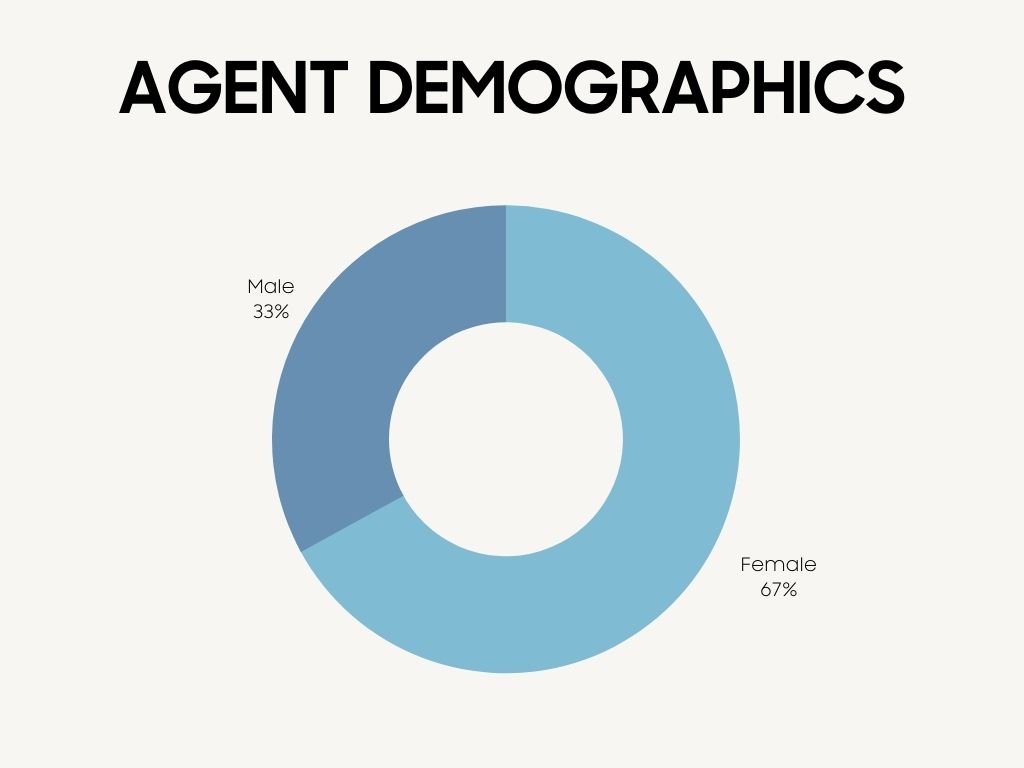
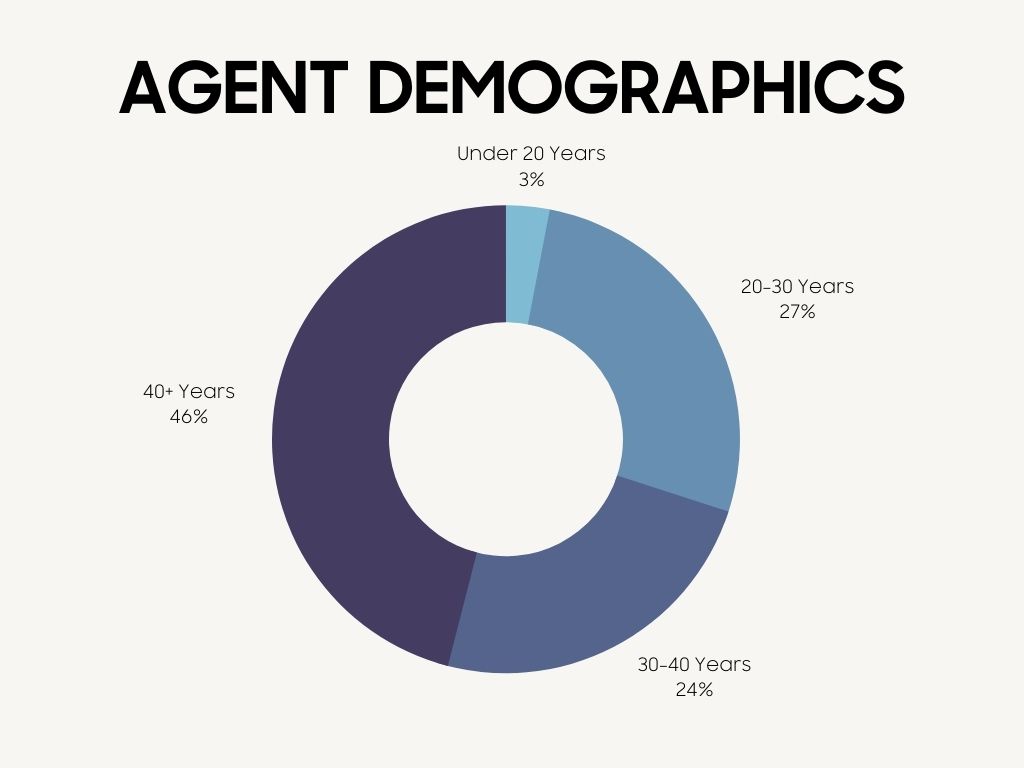
    In order to build a winning strategy for hiring and retaining contact center agents, it’s important to understand the overall contact center agent demographics. Females represent 67% of the contact center agents, males 33%. Almost half the agents are 40 years or older. The average contact center agent wage is $27,000/year.

    Impact of COVID on the Contact Center

    According to Contact Center Pipeline, the biggest challenges that companies reported this year was not having enough staff to handle the workload. The next biggest challenge was the difficulty supporting home agents. Contact Centers reported increases in contact volumes – sometimes as much as 7 times as much volume in March, 2020 when the country began to shut down due to COVID. However, contact centers continue to report high contact volumes. In April, Disney Vacation Club sent an email to customers stating that they had high hold times due to more complex inquiries and higher volume of contacts and were working to remedy the issue as quickly as possible which included hiring more cast members and investigating new phone systems to enhance their customer service. For additional thoughts on the long-term impact of COVID-19 on the contact center, here is a blog that I wrote on the topic earlier this year.

    Impact of COVID on Women’s Employment

    Since two-thirds of the agent workforce is women, it is important to understand the impact COVID had on women’s employment. McKinsey reported that nearly one-third of mothers in the workforce were considering leaving or downshifting their career. They reported having to do more of the household chores and child care as compared to their male counterparts. They reported feeling more exhausted and burned out.

    Recommendations for Staffing

    • Offer Flexible Scheduling – In order to attract and retain labor, you need to provide flexible scheduling including shift bidding, the capability to easily trade shifts and split shifts. Shorter shifts may also be attractive to some of your labor pool and may also benefit the company to be able to more accurately staff based on needs.
    • Continue to offer and enhance your Work from Home program – Review your work from home program. What worked well and what needs refinement? As we shift from Crisis mode, to offering a long-term sustainable work from home model, you should do a holistic look at the lifecycle of a work from home agent. Have roundtables with the agents that have worked from home to understand what has worked well and what they need in order to feel more successful at home.
    • Enhance the Employee Experience – As hiring and retaining employees becomes a competitive advantage, survey your employees often to understand the overall morale and where you should focus on improving. This focus should be on employee programs, tools that make their jobs easier as well as a review of processes. In addition, companies should start looking at career progression opportunities to be able to clearly show progression paths to prospects and current agents.
    • Look at opportunities to automate – As labor costs will continue to rise and staffing will remain a challenge, this is a good time to look at ways to automate and deflect contacts coming into your contact center. This includes exploring a omnichannel self-service approach that includes bots, IVR and self-service on the web.

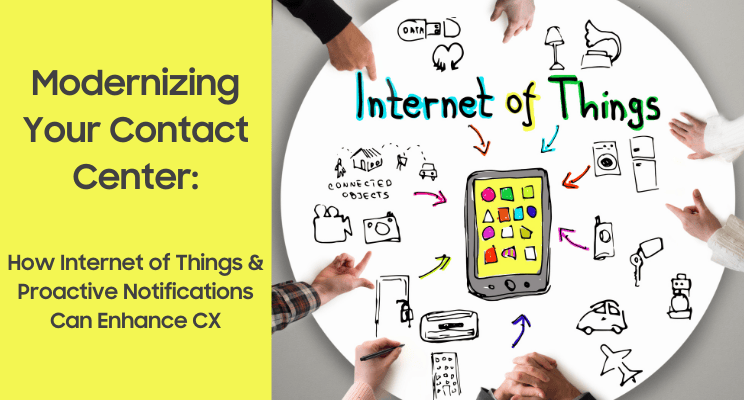
  • How Internet of Things (IoT) Can Proactively Enhance Customer Experience

    How Internet of Things (IoT) Can Proactively Enhance Customer Experience

    We live in a connected world. There were 22 billion devices connected to the internet in 2018 and it is projected to grow to 38.6 billion in 2025 and 50 billion in 2030 (Statista). To put that into perspective, there are currently 7.9 billion people in the world today and it is projected to grow to 8.2 billion by 2025 and 8.5 billion in 2030 (Worldometer). By 2030, it is projected that each person has approximately 9 connected devices!

    Have you ever stopped and thought about how many devices you own that are connected to the internet? My family of 7 has 32 devices that are or can be connected to the internet. This includes TVs, gaming consoles, mobile phones, tablets, vacuums and interactive voice assistants. I can check my phone and see where my family is. I can see how long they have been there and how fast they are going. We haven’t adopted smart home technology yet (such as connected lights, doorbell, thermostat, etc.) and our cars are not connected.

    Having all this data at my fingertips enables me to be connected and provides convenience. I am excited to think about all the ways customer experience can be enhanced by leveraging IoT and proactive notifications. People are busy and customers want frictionless experiences. When companies make the experience effortless (or low effort), customers are 94% more likely to repurchase and 88% more likely to spend more with your company (Customer Experience Board). IoT can enable an effortless experience as well as drive down contacts into your contact center.

    Proactive notifications are a part of providing a frictionless experience. 85% of consumers want to receive proactive notifications (Nuance). 70% of consumers view brands that send proactive notifications more favorably (Statista). A connected world enables companies to gain more insights and therefore, proactively reach out.

    Examples of IoT coupled with proactive notifications

    A Connected Car with Service Reminders

    That pesky light on the dash comes on to remind you your car needs an oil change. Imagine if you had a much more conversational reminder for car maintenance. For instance, based on mileage, you could get a proactive reminder sent to your phone not only for your oil change. You could receive a notification that it’s time to rotate your tires with useful information on how this will prolong the life of your tires and maintains your tire warranty. Taking it one step further, the reminder should offer you available appointments for your tire shop for that rotation.

    The check engine light comes on and you don’t know whether you should call your mechanic immediately or if it is safe to wait for a little bit before taking your car in. Imagine, by having a connected car, that the code associated with that light comes on. It alerts you that you have a faulty O2 sensor and that you should get that checked on the next maintenance appointment. It also sends a notification to your mechanic on record to check that during the next maintenance appointment with the information associated with the fault.

    A Connected Home with Conversational Proactive Alerts

    You have your home sprinkler system scheduled to turn on every morning at 5 AM. However, there is a 100% chance of rain one day during the week. Your sprinkler system sends you an alert that it is supposed to rain and asks you if you would like to turn off your sprinkler that day. Taking it one step further, it shows you the environmental impact of how much water you saved by turning it off for that day.

    Your furnace has malfunctioned and your thermostat notices that it is not able to keep your house at the preprogrammed temperature. It proactively alerts both you and your HVAC company of the issue. Your HVAC company is able to remotely access your furnace and diagnose the issue and sends you a notification that a technician needs to visit your home and correct the issue and provides you with the next appointment time which you are able to confirm or contact them for alternative times. This was all done before you noticed the temperature dropping in the home.

    Additional Examples of Proactive Alerts

    The internet goes out in your neighborhood. Your internet provider detects the issue and proactively notifies all the customers of the internet outage as well as the estimated time for restoral.

    You have scheduled installation of new internet service at your house. However, the technician is running late. Since they are in a connected vehicle, an alert is sent that they will be late to the service call. The Internet service provider has scheduling software that automatically looks for other available technicians in your area that could possibly service you faster and reroutes another technician to your home. You are proactively notified that the technician is running late and provides a new ETA with a link to check on where your technician is en-route.

    Summary

    Compare these examples to what you experience today. How many times have you had these sorts of effortless reminders? Unfortunately, these are not the norms. Reactive customer service is still the norm. As a consumer, these experience are often frustrating. Think about the customer experience you provide as a company. Where can you leverage IoT and proactive notifications to make it easier for your customers? By leveraging proactive notifications, you can increase customer satisfaction, loyalty and revenue as well as decrease operational costs.

  • Exceptional EX Results in Excellent CX and Drives Additional Revenue

    Exceptional EX Results in Excellent CX and Drives Additional Revenue

    Engaged, happy employees drive a better customer experience. A better customer experience drives additional revenue. Here are some interesting statistics on the link between employee experience, customer experience and higher revenue:

    • For each one-star improvement in a company’s Glassdoor rating, there’s a 1.3 point improvement in CSAT scores (Harvard Business Review).
    • Stock prices of Fortune’s 100 Best Companies to Work For list rose 14% per year from 1998 to 2005, while companies not on the list, stock prices only increased by 6% (Forbes).
    • Culture matters – companies that are ranked in the top 25% for culture show a return to shareholders 60% higher than median companies and 200% higher than those in the bottom 25% (McKinsey & Company).
    • A 5% increase in employee retention can boost profitability by 25 – 95% (Medium).
    • “If you run a contact center with 100 agents and have an industry-standard 45% attrition rate, you spend anywhere from $1.6 million to $4.8 million each year on turnover.” (Sharpen CX)

    We have to stop thinking of agent attrition as a “norm” that costs us recruiting fees and training costs. The economical impact of attrition reaches beyond the costs of recruitment and on-boarding – it impacts customer satisfaction and loyalty. Providing a great employee experience is key to driving down attrition.

    Keys to Driving a Better Employee Experience

    It starts with Culture

    Culture extends beyond the individual employee experiences. It includes the values, mission, attitudes and beliefs that a company has. High employee morale and a culture that cultivates relationships starts with leadership. Leaders need to model the behaviors and core beliefs in order for employees to adopt the vision and beliefs. Culture is the backbone of an organization and a strong culture results in three times higher returns to shareholders than companies without it (McKinsey). One of the most recent trends in culture is an innovative experience culture – a culture that works agilely to close the gap between the brand promise and the experiences delivered (Accenture). In fact, individual contributors & senior leaders see innovation as a top priority and building a culture around it will enhance the overall EX (Deloitte).

    Flexibility & Personalization

    Working from home became the norm for the past 15 months. Companies will need to provide options for flexibility and personalization as they start defining their post COVID-19 work policies. Personalizing the employee experience by offering flexible working arrangements that are curated based on employee preferences is key. Some employees may desire to return to work full-time, some may prefer a hybrid model and others may prefer to continue to work from home full-time. More companies are moving to a non-traditional work schedule by not looking at hours worked, but rather by deliverables completed.

    According to Gartner, when organizations offer employees flexibility with hours, they see 55% of their workforce as high performers (much higher than those organizations that are more rigid). While there continues to be bias towards in-office workers, full-time remote workers are 5% more likely to be high performers. As lines continue to blur, the conversation changes from work-life balance to overall well-being. In Deloitte’s 2021 Global Human Capital Trends report, Individual workers rank “improving worker well-being” as the third most important transformation effort, while senior executives rank it #8. Companies need to make well-being a priority and weave it into the company’s overall culture to drive better employee experience.

    Providing the Right Tools & Designing Optimized Processes

    I work with many companies on optimization and customer experience projects. One of the biggest opportunities I see is reducing the amount of human capital that is being used on administrative and repetitive tasks. We have to focus on eliminating employee friction and making it easier. Our teams want to do a good job, they want to take care of the customer. However, oftentimes, the tools and processes that are provided make it difficult to do that. Having optimization teams look at how to automate administrative tasks and eliminate friction will pay dividends. Tools should focus on optimization and building a sense of team. Collaboration tools that enable a distributed workforce to connect effectively are critical. By providing the right tools, you will not only happier employees, but also happier customers.

    Providing Upskilling and Training

    As more administrative tasks and informational/transactional work is automated, we have to focus on continued upskilling and training for our workforce. Today, 45% of the tasks that are handled by humans, could be automated. 60% of jobs could have 30% or more activities automated (McKinsey). The contact center agent is changing – their role is focused more on empathy, problem solving and relationship building now. There are additional roles in the contact center that weren’t there 10-15 years ago as new technologies are being introduced. Process improvement, automation, knowledge management and analytics jobs are being added and require a new level of skill. By continuing to invest in your workforce, you are building a resilient and innovative culture. This will result in a better employee experience experience.

    Summary

    As we emerge in the post COVID-19 world, transformation and innovation has accelerated. It is imperative that there is laser focus on the employee experience. This includes personalization, removing effort and friction, upskilling and creating an innovative and inclusive culture. By focusing on your employees, you will be building a better customer experience and adding to the bottom line.

  • AI Drives Efficiency and a Better Experience

    AI Drives Efficiency and a Better Experience

    While artificial intelligence has been an emerging technology for many years, adoption has accelerated as a result of COVID-19. According to Accenture, 3 out of 4 C-Suite executives believe if they don’t scale AI in the next five years, they risk going out of business. The #1 reason that companies are investing in AI is to improve customer experience with the second reason being cost reduction (Forbes). Gartner predicts that by 2022, 70% of customer interactions will involve emerging technology which includes AI. In fact, many companies are focused on providing an AI enabled customer experience in their contact centers to enhance the customer and employee experience. Today, we will discuss practical AI applications that can be leveraged in your contact center to not only drive efficiency, but also improve CX and EX.

    Conversational Bots

    Bots are the most common application of AI. According to Gartner, CIOs identified chatbots as the most common application for AI in their enterprises. Conversational bots are driving disruption. These bots which are NLU enabled, can handle transactional and informational inquiries while also gathering pre-routing tasks for more complex interactions. By gathering additional information about the customer and inquiry, these contacts can be routed more effectively and provide context to the agent which will enable the agent to provide a more personalized customer experience. Some best practices when deploying a bot include making it clear the customer is interacting with a bot and providing an easy way to get to a human agent at anytime.

    Some examples of bots include:

    • USAA’s conversational assistant which handles 20,000 contacts per week
    • Amtrak’s virtual assistant, Julie which can handle inquiries such as booking reservations, questions about schedules and guest reward programs
    • Emirates offering 4 chatbot personas to handle customer inquiries.

    Biometrics

    Voice authentication is one biometric solution that is gaining popularity in the contact center. Rather than leveraging a customer number, passwords or PINs, voice authentication identifies callers by the behavioral and physical characteristics of their voice. This enables companies to prevent fraud as well as reduce average handle time and increase self-service by having a better way to authenticate callers in the IVR. Organizations that are most likely to adopt this technology include healthcare, financial services and insurance where authentication is required. The FTC reported more than 2.1 million fraud reports in 2020 costing $3.3 billion (up from $1.8 billion in 2020). By reliably authenticating a customer in the IVR, the handle time is reduced. In one example, the Australian Taxation Office stated that handle times were reduced by 48 seconds by using voice authentication.

    Predictive Behavioral Routing

    Over the course of the last 20 years, we have seen contact routing mature from queues to skills-based routing. Now, there is a new era of contact routing that is infused with AI insights to create a hyper-personalized experience. This includes predictive behavioral routing and smart routing algorithms which anticipates why the customer is reaching out and tailoring the self-service and routing experience. According to Forbes, predictive behavioral routing relies on AI and analytics to match the callers with specific personality models and in turn those are routed to agents that can best handle those personality types. Predictive behavioral routing reduces handle time and increases productivity as well as leads to a better experience for the agent and the customer.

    Agent Assistance

    By leveraging real-time natural language understanding to interactions, agents get real-time insights and suggestions on the next best action when assisting customers. In addition, AI can analyze the customer sentiment and provide real-time coaching on soft-skills such as empathy and active listening. This not only provides a better customer experience, but also leads to a better agent experience. Agents are able to quickly adjust their responses and increase their soft-skills. In addition, this reduces the amount of supervision and coaching that is required by supervisors.

    Robotic Process Automation (RPA)

    Many times, agents become the human middleware between the customer, contact center platform, CRM and back-office systems. It is not unusual in legacy environments, for an agent to work in more than 5 different systems when servicing a customer. Oftentimes, the agent has to perform manual data entry processes across multiple systems to be able to serve a customer. RPA can be leveraged to perform repetitive tasks and processes and alleviate some of this burden from the agents. According to Maruti Techlabs, RPA can increase efficiency up to 90%. RPA which decreases handle time and overall effort. Some examples of where RPA is commonly used is creating invoices, issuing refunds, and migrating data between systems.

    AI Infused Quality Management

    In the contact center, the quality teams have always had challenges with having enough bandwidth to provide effective and efficient quality scoring. Some of the challenges have included low number of contacts sampled, random sampling of contacts, manual processes and subjective scoring that is not calibrated. However, imagine infusing your quality management platform with AI to eliminate some of these challenges. By leveraging AI in your quality management program, quality analytics can be applied to 100% of the contacts – scoring the contacts and providing quality insights with an increased accuracy and efficiency.

    AI Infused Interaction Analytics

    AI infused Interaction Analytics provides actionable insights into the contact center. IA not only identifies trends and reasons for contacts, it also can analyze customer sentiment. Taking this a step further, interaction analytics can identify reasons for repeat contacts. By combining customer sentiment with trends and reasons for contacts, contact centers can quickly identify customer friction points that need to be addressed in the organization. This enables organizations to become more customer centric.

    AI Infused WFM

    Forecasting and scheduling can be labor intensive and tedious leveraging various models. Variations in historical volumes can skew forecasts. This can include seasonal variations, holidays falling on different dates, an increase in volumes due to spam and patterns due to various incidents such as outages. In addition, omnichannel contact centers add complexity in creating an accurate forecast. AI enables a more accurate forecast taking the trending and SLAs for each channel into account when creating a forecast. With AI enabled workforce management platforms, the application can create more accurate forecasts by providing additional insights into the reasons for the variations and determine whether to include that data into the forecast. Taking this a step further, by leveraging AI, you can quickly schedule agents taking into account agent preferences and prioritizing personal preferences.

    As you can see, there are so many opportunities to leverage AI in the contact center to improve the experience for the agent and customer.

  • Siloed Systems Are The Death of Great CX & EX

    Siloed Systems Are The Death of Great CX & EX

    A few years ago, I was sitting in a hotel room in New Orleans, staring at a blank slide deck. The next morning, I was presenting at a kick off for a quote to cash project. I wanted to deliver a message showing how modernizing the quote to cash process would enhance customer experience.  The siloed systems which were a result of acquisitions and divisions operating independently were negatively impacting customer and employee experience. How could I craft a message that would resonate with finance, IT, operations & warehouse teams?

    Looking for inspiration, I started listening to our customer service calls for the day.  After listening to just the first call, I realized this is it!  The team needed to hear this. The call was a 12 minutes and transferred 4 times. The question was simple – why do I have a charge on my credit card from your company? Ideally, this customer should have been able to self-serve. However, at maximum, this should have been a one minute phone call.

    The next morning, I opened my presentation by sharing the “why” for the project. I played that 12 minute call. The discussion that followed was better than I had expected. I had anticipated the audience would show empathy towards the caller. I was proud when the first reaction wasn’t about the poor customer experience, but rather empathy towards the agent. This call became our rally cry, not just for the quote to cash project, but for other initiatives. This call would be played to the c-level and executives across the organization.

    Optimizing the Experience Through Integrations

    “That call” was not an easy fix. Many organizations that I have worked with have had similar challenges. Siloed systems and processes have been defining their customer experience. However, the modern customer expects hyper-personalization, automation and self-service. Customers want companies to respect their time and make it easy for them. Customers want companies to anticipate issues and proactively reach out. They want a frictionless experience. According to Forbes, 54% of customers will stop doing business with companies that deliver bad customer experience.  In addition, according to PWC, customers are willing to pay more for a better experience – up to 25% more.  

    Providing a great agent experience is also critical. According to McKinsey, engaged and happy call center employees are 8.5 times more likely to stay than leave within a year and are 3.3 times more likely to feel empowered to resolve customer issues. By providing the necessary tools to be able to do their job, they will stay engaged and in turn, provide better customer experience to your customers.

    What causes friction in an agent’s day? The number of systems they have to navigate and repetitive data entry are common concerns I hear when talking with agents. By integrating systems to pull and push data, you can make the experience easier for the agent and ultimately better for the customer.

    Getting Started with an Integrated Experience

    As you focus on providing a great customer and employee experience, it can be overwhelming to determine where to start. Take a look at your customer journeys. Where is there friction? Where can you offer self-service and a better experience by integrating systems? At a minimum, your contact center platform should be integrated with your CRM to offer a better experience. Look at your key contact drivers – what systems provide the information to answer those questions? Consider integrating your customer service platform with those systems so you can offer self-service. The key is to look at areas that you can iteratively improve the employee and customer experience.  Once you have made an improvement, measure, listen and analyze. Identify additional areas of improvement and integrations that will lower the level of effort for both your employees and your customers. By working in an agile manner, you can incrementally improve the experience which will result in higher CSAT scores and ultimately drive revenue to your bottom line.