Tag: RingCentral

  • How to Prevent Contacts Before They Get to Customer Service

    How to Prevent Contacts Before They Get to Customer Service

    I often get asked what an ideal contact center looks like. I used to answer “An ideal contact center would be one where there wasn’t any contacts…at all.” However, I have shifted in my thinking. Sometimes, you want customers to contact you in order to build or deepen the relationship. It doesn’t always need to be over the phone, it could be across a number of different channels. However, customers should have the opportunity to self-serve through multiple different channels. Oftentimes, the contact center addresses friction in the customer experience. While, it isn’t realistic to think that we will get to no customer service contacts, there are steps you can take to reduce the number of contacts coming into your customer service organization while maintaining or improving customer satisfaction.

    Strategy #1: Have a robust customer facing knowledge-base/self-service portal

    88% of customers expect a company to have an online self-service portal. In fact, 65% of customers prefer self-service for simple inquiries. A robust knowledgebase is critical as part of your self-service strategy. Some of the critical capabilities that I looked for when I managed the knowledge and self-service aspects in the contact center included:

    1. Knowledge Search – Having intelligent, contextual search engines that were included federation. Making the knowledge readily available and easy to find is critical.
    2. Knowledge Creation – Having a simple interface to be able to create content. Version control and the capability to support multiple media types including videos and pictures was critical.
    3. Have troubleshooting flows – Having decision trees in the knowledge bases enable customers to troubleshoot .
    4. Robust analytics & reporting – Gain insights on the number of people leveraging the knowledge articles. Understand what the next step was after they consumed the content. This will enable you to understand whether the article was helpful. In addition, providing the customer with an opportunity to rate knowledge articles is also insightful.

    Strategy #2: Provide Self-Service across your contact center channels

    I was surprised with some of the latest cost per contact data from Benchmark Portal this year. For the first time since I started looking at the data, the cost per chat was more expensive than the cost per voice call. This was very surprising, but it got me thinking. How many companies are deploying web chat without a self-service strategy? We have mastered self-service in the IVR. There are many benefits of webchat including the asynchronous manner and the capability for agents to handle more than one chat at a time. However, deploying chat without a self-service strategy such as a bot can be detrimental to the success of your channel strategy. Bots (preferably conversational AI bots) should be deployed across your digital channels to help with your self-service and deflection strategy.

    Strategy #3: Leverage Analytics to Understand the Reasons for Contact and Reduce Customer Friction

    Interaction analytics is one of my favorite contact center tools. However, it is not just for contact center staff. This tool takes a plethora of unstructured data and converts it to structured, actionable data. Leveraging the data you get from interaction analytics to identify customer friction across the customer lifecycle is critical to driving out friction and ultimately reducing customer service contacts. I would encourage contact center managers to architect their analytics to enable transparency across the organization. Ideally other divisions could leverage analytics to understand how to improve their areas whether it is product, marketing, sales, supply chain, etc to reduce friction and eliminate contacts.

    These are just three areas to focus on to increase self service and decrease contacts coming into your contact center. I would encourage you to look at reporting on each of these areas and continue to focus on contact deflection as one of the key areas in your contact center. I had a group that focused on this and were measured by the percentage of contacts deflected. What other ways are you deflecting or preventing contacts from coming into your customer service organization?

  • Should Customer Performance Indicators (CPIs) be the New KPIs?

    Should Customer Performance Indicators (CPIs) be the New KPIs?

    When we think about key performance indicators in the contact center, I am starting to think we have it all wrong. We talk about the maturation of the contact center – moving from a call center to a contact center to a customer experience center. While we have reimagined the customer experience in the call center, it is time to reimagine the metrics that come along with reporting. Should customer performance indicators (CPIs) be the new performance standards for the customer experience center?

    The Birth of the Call Center

    When I started my career, call centers were considered a necessary part of every business where customers could call in and ask for help on their specific inquiry. The IVR was often an auto-attendant – redirecting the call to a specific department. As the call center matured, so did the IVR. There began to be a focus around self-service and deflection – getting information from back-end systems to provide to the caller. Then customers began to email the call center. A call center was no longer just a call center, but rather was beginning to become a contact center. We weren’t thinking about queuing anything more than just calls, but were starting to think about how we organized groups to handle calls vs. emails. Typically we had a phone group and an offline group handling emails and manual orders.

    From Call Center to Contact Center

    With the adoption of e-commerce, web chat started emerging as a new channel. Most often, phone was handled by one group and chat/email was handled by another group. When the smart phone emerged in the early 2000s – social media also started to be introduced. We quickly realized that social media wasn’t only for personal communication, but we needed to use it for business communications as well. Social Customer Care groups were created to address this need.

    Additional channels were introduced. We also started learning about the value of the relationship and a great experience in the contact center. When a customer had a poor customer experience with the company, they started using social media to tell their friends (and the rest of the world). We started shifting our thinking. We can’t afford to continue to look at average handle time as the primary KPI for agent performance in the contact center. Call centers needed to get less rigid about call scripts so that agents didn’t sound so robotic and well…scripted. Customers wanted to be able to interact with the agents and have a conversation.

    Over the course of the last decade, we have realized that we need to have a cohesive approach when it comes to responding to customer inquiries across all channels. Customers may start a conversation in one channel and move to another channel. The conversations need to be threaded across channels. We also realized the value of customer satisfaction. The agent had an impact on overall customer satisfaction which ultimately had an impact on revenue.

    From Contact Center to Customer Experience Center

    We now believe that the contact center is more than just an organization that reacts to customer inquiries. It can add overall value to the organization. It can even be considered an extension of marketing. The goal of the customer service organization is not only to reply to contacts, but to be proactive and customer focused. The contact center can enhance the relationship with the customer. Contact center management has stopped coaching agents on average handle time and adhering to strict scripts. Customer Service organizations are starting to be considered strategic partners in the organization. The data they have and the advanced applications enable better insights into the customer journey. The contact center can identify customer friction throughout the organization and show ways to reduce customer friction.

    Why Traditional Call Center KPIs Don’t Make Sense

    What are the top call center KPIs? The main ones are Abandon rate, average speed of answer, average handle time, transfer rates, average handle time, service level and first contact resolution. There are so many variables that go into each one of these KPIs. When I was working in a contact center, I had so many conversations on average handle time and the variables of the day, week or month that was driving AHT. It could be a new change on the website would drive more calls and drive higher AHT as the calls were more complex than usual. Minor variations into these KPIs typically did not impact overall customer satisfaction.

    What drove customer satisfaction? Quick resolution time, being able to get their question/issue handled and knowing that the agent cared. There are a whole new set of tools that we need to consider the impact to overall customer satisfaction and ultimately company profitability. AI infused routing to get the contact to the best matched agent, analytics to identify upstream friction (so that we can eliminate it), customer sentiment detection are all fairly new to the contact center.

    As the systems mature, why haven’t we rethought analytics and performance metrics more? More people are thinking about the contact center not as operational overhead, but rather an extension of marketing. Customers drive company growth. How? Through social media, company reviews, word of mouth and much more. KPIs are company centric whereas CPIs are customer centric.

    CPIs You Should Consider Measuring

    Customer Effort Score – Unlike NPS which is company focused, Customer Effort Score is customer focused. While companies want customers to promote them, customers want companies to be easy and frictionless. Therefore, companies should move to CES to be more customer centric.

    Customer Sentiment – Companies should measure the ratio of contacts with positive sentiment vs. negative sentiment. Companies should make it a goal to have a very high ratio of positive contacts to each negative contact.

    Customer Reviews – Companies should track organic customer reviews. How many positive reviews vs. negative reviews does a company get?

    Customer Acquisition & Customer Retention Rate – How many new customers are you acquiring and what is your customer retention rate?

    Time to fulfill the customer’s desired outcome – How is the company performing compared to the customer’s desired outcome. This may be mean time it takes to provide a quote or the mean time it takes to resolve an issue once reported. If they have already ordered a product, it is mean time to fulfill the order.

    With all the advances in technology, it is time to rethink the way you measure your performance as a customer centric company. Saying you are customer centric is just the first piece of adding additional value. You have to perform as a customer centric organization – flattening the organization and focusing on the customer outcomes. Then, you have to measure how you are doing based on customer expectations. It is time to update those performance indicators to reflect your more modern customer-centric organization.

  • A Guide for Setting Up Your Contact Center After a Merger or Acquisition

    A Guide for Setting Up Your Contact Center After a Merger or Acquisition

    After an acquisition or merger, not only do you have to determine how to merge all the various business applications, you also have to determine what the future-state customer experience should be.  This includes merging the contact center experience.  You will likely have disparate phone numbers, email addresses, skillsets, IVR applications and reporting that you will need to review to determine best future-state design.  Here are some things to consider as well as best practices when merging companies from a contact center design perspective.

    How to Manage Phone Numbers & Emails after an Acquisition or Merger

    When determining what phone numbers to maintain after an acquisition or merger, the best practices include:

    • Understanding where the numbers or email addresses are published today
    • Understanding current volumes for the phone numbers or email addresses
    • Identifying any vanity numbers (Phone numbers that typically spell out words) and determining if you want to maintain vanity numbers. 
    • Are there any fax numbers that are published that may need to be updated? 

    How to Manage Phone Numbers & Emails after a Partial Acquisition or Merger

    • Transferring ownership of the phone numbers and email addresses to the acquiring company for the division being acquired with a definitive timeline associated with completion of the migration.  
    • The company that is being acquired should sign a letter of agency associated with all the phone numbers that were part of supporting this portion of the business and work with you on transferring ownership to the acquiring company. 
    • While the resporg is being completed, the acquired company should forward the phone numbers to a target phone number that is owned by the company that is acquiring the business.  This will enable the company to handle the call flows internally.  
    • If there are options in the acquired company that include the division that is being acquired, then an announcement should be played advising the caller when they choose that option of the new company and phone number.  Eventually the company that spun off the division should modify the IVR to remove those options (based on a mutually agreed upon timeline). 

    Once you understand the volumes associated with each phone number, you will need to:

    • Determine how you want to proceed with migrating volume to the parent company’s existing phone numbers.  This includes updating any marketing materials and websites to reference the phone numbers and email addresses that you have identified that you will be keeping.  
    • Once you have updated the websites and marketing materials, run usage reports and determine impact on volume of the old phone numbers.  
    • For a period of a few months, play a message that the phone number has changed and redirect the call to the new phone number. 
    • After a few months of playing the message and redirecting, play the message and disconnect the call. 
    • Continue to run call traffic reports on your toll-free numbers and disconnect when negligible traffic remains on the old numbers. If significant volume remains, ask the callers where they are getting the phone number from to see if there are additional areas where the number is published that you were unaware of.

    The same process should be completed for email addresses as well. 

    How to Handle Call Routing & The IVR After a Merger or Acquisition

    Evaluate the call routing for the acquired company and the skills the agents need  in order to handle the calls.  Call Routing should be designed for the best customer experience, not for reporting purposes.  Reasons for contacts can be captured at the disposition of the call (and not based on options in the IVR).  The IVR’s role is for identification, deflection (where it makes sense) and routing the contact to the correct group of agents.  As you are evaluation the routing, ensure that the IVR is designed to fit these needs. 

    For call routing purposes, you will want to do the following:

    1.  Identify any opportunities for self-service.  Are there opportunities to identify the callers in the IVR or offer self-service to deflect the calls
    2. Identify reasons that calls will need to be prioritized over other calls. 
    3. Determine skill groups of agents and who can take which calls
    4. Determine what integrations are necessary for the IVR and screen pops
    5. Once you have determined the skill groups of the agents, the priorities needed and the self-service that you can offer, you can start designing the to-be call flows.  These will likely be a combination of the old IVR of the company that was acquiring the new company with additional components incorporated of the newly acquired company.
    6. If there are functions that are significantly different from the existing business, it may make sense to have different call flows/applications to ensure a better customer experience
    7. Run reports on existing IVRs, skills, etc.  Are there some that are getting no volume and can be removed?  This is a good time to do a complete audit of what is built and clean up any unnecessary configuration. 

    How to Handle Other Channels During a Merger or Acquisition

    Evaluate what other channels you should service the customer on.  Is there a social media presence?  SMS texting? Web chat?  All of these channels should be evaluated and determine future state routing and responses.  Things to consider when migrating these additional channels include:

    • Any rebranding that needs to be completed for the chat design or templates
    • Any additional quick responses that need to be added to incorporate additional questions about the merger/acquisition or unique questions that may be posed based on the company being acquired. 
    • Determine skills that should be added to the configuration or if you can use existing skills based on the use case. 

    Additional Items to Address after a Merger or Acquisition

    Additional items to consider when you are acquiring a new company:

    1.  Are there additional components and information that you need to add to the knowledge base or agent training on new products/services as a result of the acquisition
    2. Determine if you will be maintaining any of the agent employees from the company that is being acquired?  If so, you will need to create a plan for onboarding and training. 
    3. Review and update your forecasts with the new volumes added in from the company being acquired.
  • Debunking the Myths of Work from Home

    Debunking the Myths of Work from Home

    After I had my first child, I had worked out a plan to work from home every Friday. I am grateful to my manager for trusting me and being forward thinking. However, there were skeptics that didn’t believe work from home would work. Almost 20 years later, it surprises me we are still having the debate on whether work from home really “works”.

    Myth #1: Office workers are higher performers than work from home employees

    FALSE – Gartner revealed that 64% of managers believed that office workers are higher performers than remote workers. However, when companies offer flexibility on when and where they work, they see 55% of their workforce as high performers. People who work from home tend to be more engaged. We are seeing the lines of personal life and work blur. No longer is 9-5 completely dedicated to work and 5-9 dedicated to family. With autonomy and flexibility, I give my best self to my work and family. Today, I started work at 7 AM, took at break at 4:30 to take my son to a doctor’s appointment, came back and worked for a little bit and then made dinner and spent some time with the family. It’s now after 8:00 in the evening and I can focus on writing a quality blog.

    Myth #2: We can’t support work from home due to the technology limitations and poor bandwidth

    FALSE – According to The Internet & Television Association, 96% of US homes have access to broadband that is 3 Mbps or faster. 5 million additional households were connected to the internet in 2020. Broadband continues to evolve with developing 10G to homes. This will enable even more reliability and quality for voice, video and collaboration – connecting people more than ever before.

    With the increased adoption of the cloud, companies readily offer UC solutions, such as RingCentral’s MVP (Message, Video and phone) as well as hosted contact centers. This eliminates complexity and points of failure of remaining connected via VPN back to companies private data centers. This enables companies to collaborate and work more agilely across applications.

    Myth #3 – In-Office leads to better collaboration due to being able to have hallway conversations and stick your head into people’s offices

    FALSE – Many companies have built new offices with open floor plans and working spaces. The thought was these spaces would foster more collaboration with the ultimate goal of being more innovative. According to Harvard Business Review, when companies shifted to open offices, their face to face interactions fell by 70%.

    I sat in a physical contact center recently. It was the first time in 19 months. There is something to be said with getting an overview of what is happening by being physically there and overhearing a number of conversations. However, with the advancement of technology such as interaction analytics, you can also keep a pulse on the environment by querying and pulling interactions. Since the adoption of work from home has been slow until March, 2020, we are still learning. We need to experience and look at various ways of collaborating to determine the most effective remote collaboration methods. It could be a combination of video and messaging.

    It will be interesting to see how work from home evolves over the course of the next few years as we move into sustainability in a post-pandemic world. While there was much devastation over the course of the last 19 months, there will be many things that are permanently changes. Work from home is something that I believe is here to stay. It may look different – it may be hybrid. However, I can’t imagine a 40 hour work week in the office – my 2 covid dogs can’t imagine that either! If you are looking for more information on creating a sustainable work from home program, here is a recent blog I wrote.

  • Five Critical Steps for a Successful Digital Transformation

    Five Critical Steps for a Successful Digital Transformation

    According to McKinsey, 70% of digital transformations fail, typically due to lack of employee buy-in. Digital transformation has become a driver for contact center modernization. This is not just a lift and shift of current technology, but a complete transformation. It is creating an ecosystem of systems to provide more digital channels that result in a better customer experience. And those companies that succeed with digital transformation see an increase in customer satisfaction and increases in revenue. How do you ensure that digital transformation succeeds? It begins with culture.

    Defining the Customer Experience Vision

    The first step in any digital transformation is defining the vision. This vision typically comes from the c-suite, but should include inputs from other areas of the organization. It should address some of the pain points that are experienced today. What should great customer experience look like? How do you modernize the experience to meet customers needs? Removing friction from the current experience and enabling the customer to engage in the channel of their choice are critical. It should also include proactive communication.

    Start with Desired Business Outcomes

    Begin with desired business outcomes when defining the transformation. Starting with the legacy processes could limit your ability to innovate. The death of any great transformation is getting caught up with “this is the way we have always done it”. As you create new business processes, it will look very different than legacy processes. There will be those that doubt that the new processes will work. Listen to the feedback and identify areas of focus for change management,

    Focus on Change Management

    When I was leading transformation, I often went to the CIO/COO to emphasize the importance and criticality of change management. I found creating a change advocate group that spanned across all levels of employees worked well. We would have bi-weekly meetings with the group providing updates and listening to feedback. We would encourage the change advocate team to talk to their peers about the transformation. Active detractors and promoters participated in the change advocate group, ensuring we had balanced representation. Our goal was to convert those detractors to advocates by the launch date.

    Be Ready to Pivot

    During the couple of years that I led the digital transformation for my previous employer, I grew to hate the word pivot. However, it was necessary to redirect when we hit roadblocks. It was necessary to sometimes change the roadmap slightly and other times we had to change the roadmap significantly. There were times we were charting unnavigated waters and even the best laid plans sometimes resulted in roadblocks. The amount of money invested in transformations is significant. Therefore, you have to be agile in thinking, and making quick decisions to minimize the impact of the roadblocks to the project.

    Continue to Innovate

    After you have launched the changes, continue to listen to customer feedback and focus on improvements. Review where you have met or exceeded expectations. Review where you may have inadvertently introduced customer friction. Look at the data points and customer feedback. Continue to make incremental changes in the experience.

  • How Internet of Things (IoT) Can Proactively Enhance Customer Experience

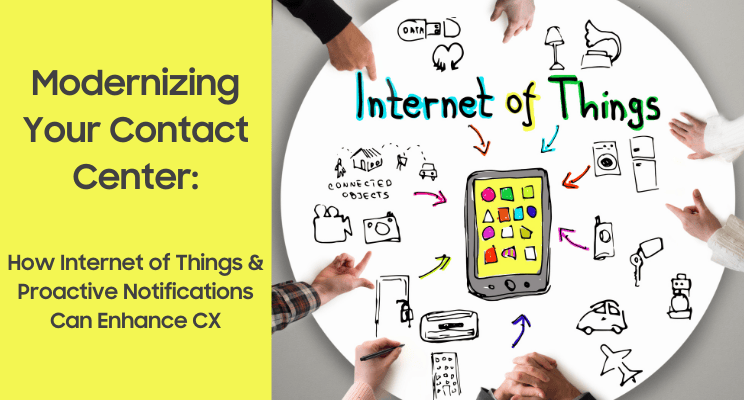
    How Internet of Things (IoT) Can Proactively Enhance Customer Experience

    We live in a connected world. There were 22 billion devices connected to the internet in 2018 and it is projected to grow to 38.6 billion in 2025 and 50 billion in 2030 (Statista). To put that into perspective, there are currently 7.9 billion people in the world today and it is projected to grow to 8.2 billion by 2025 and 8.5 billion in 2030 (Worldometer). By 2030, it is projected that each person has approximately 9 connected devices!

    Have you ever stopped and thought about how many devices you own that are connected to the internet? My family of 7 has 32 devices that are or can be connected to the internet. This includes TVs, gaming consoles, mobile phones, tablets, vacuums and interactive voice assistants. I can check my phone and see where my family is. I can see how long they have been there and how fast they are going. We haven’t adopted smart home technology yet (such as connected lights, doorbell, thermostat, etc.) and our cars are not connected.

    Having all this data at my fingertips enables me to be connected and provides convenience. I am excited to think about all the ways customer experience can be enhanced by leveraging IoT and proactive notifications. People are busy and customers want frictionless experiences. When companies make the experience effortless (or low effort), customers are 94% more likely to repurchase and 88% more likely to spend more with your company (Customer Experience Board). IoT can enable an effortless experience as well as drive down contacts into your contact center.

    Proactive notifications are a part of providing a frictionless experience. 85% of consumers want to receive proactive notifications (Nuance). 70% of consumers view brands that send proactive notifications more favorably (Statista). A connected world enables companies to gain more insights and therefore, proactively reach out.

    Examples of IoT coupled with proactive notifications

    A Connected Car with Service Reminders

    That pesky light on the dash comes on to remind you your car needs an oil change. Imagine if you had a much more conversational reminder for car maintenance. For instance, based on mileage, you could get a proactive reminder sent to your phone not only for your oil change. You could receive a notification that it’s time to rotate your tires with useful information on how this will prolong the life of your tires and maintains your tire warranty. Taking it one step further, the reminder should offer you available appointments for your tire shop for that rotation.

    The check engine light comes on and you don’t know whether you should call your mechanic immediately or if it is safe to wait for a little bit before taking your car in. Imagine, by having a connected car, that the code associated with that light comes on. It alerts you that you have a faulty O2 sensor and that you should get that checked on the next maintenance appointment. It also sends a notification to your mechanic on record to check that during the next maintenance appointment with the information associated with the fault.

    A Connected Home with Conversational Proactive Alerts

    You have your home sprinkler system scheduled to turn on every morning at 5 AM. However, there is a 100% chance of rain one day during the week. Your sprinkler system sends you an alert that it is supposed to rain and asks you if you would like to turn off your sprinkler that day. Taking it one step further, it shows you the environmental impact of how much water you saved by turning it off for that day.

    Your furnace has malfunctioned and your thermostat notices that it is not able to keep your house at the preprogrammed temperature. It proactively alerts both you and your HVAC company of the issue. Your HVAC company is able to remotely access your furnace and diagnose the issue and sends you a notification that a technician needs to visit your home and correct the issue and provides you with the next appointment time which you are able to confirm or contact them for alternative times. This was all done before you noticed the temperature dropping in the home.

    Additional Examples of Proactive Alerts

    The internet goes out in your neighborhood. Your internet provider detects the issue and proactively notifies all the customers of the internet outage as well as the estimated time for restoral.

    You have scheduled installation of new internet service at your house. However, the technician is running late. Since they are in a connected vehicle, an alert is sent that they will be late to the service call. The Internet service provider has scheduling software that automatically looks for other available technicians in your area that could possibly service you faster and reroutes another technician to your home. You are proactively notified that the technician is running late and provides a new ETA with a link to check on where your technician is en-route.

    Summary

    Compare these examples to what you experience today. How many times have you had these sorts of effortless reminders? Unfortunately, these are not the norms. Reactive customer service is still the norm. As a consumer, these experience are often frustrating. Think about the customer experience you provide as a company. Where can you leverage IoT and proactive notifications to make it easier for your customers? By leveraging proactive notifications, you can increase customer satisfaction, loyalty and revenue as well as decrease operational costs.

  • Exceptional EX Results in Excellent CX and Drives Additional Revenue

    Exceptional EX Results in Excellent CX and Drives Additional Revenue

    Engaged, happy employees drive a better customer experience. A better customer experience drives additional revenue. Here are some interesting statistics on the link between employee experience, customer experience and higher revenue:

    • For each one-star improvement in a company’s Glassdoor rating, there’s a 1.3 point improvement in CSAT scores (Harvard Business Review).
    • Stock prices of Fortune’s 100 Best Companies to Work For list rose 14% per year from 1998 to 2005, while companies not on the list, stock prices only increased by 6% (Forbes).
    • Culture matters – companies that are ranked in the top 25% for culture show a return to shareholders 60% higher than median companies and 200% higher than those in the bottom 25% (McKinsey & Company).
    • A 5% increase in employee retention can boost profitability by 25 – 95% (Medium).
    • “If you run a contact center with 100 agents and have an industry-standard 45% attrition rate, you spend anywhere from $1.6 million to $4.8 million each year on turnover.” (Sharpen CX)

    We have to stop thinking of agent attrition as a “norm” that costs us recruiting fees and training costs. The economical impact of attrition reaches beyond the costs of recruitment and on-boarding – it impacts customer satisfaction and loyalty. Providing a great employee experience is key to driving down attrition.

    Keys to Driving a Better Employee Experience

    It starts with Culture

    Culture extends beyond the individual employee experiences. It includes the values, mission, attitudes and beliefs that a company has. High employee morale and a culture that cultivates relationships starts with leadership. Leaders need to model the behaviors and core beliefs in order for employees to adopt the vision and beliefs. Culture is the backbone of an organization and a strong culture results in three times higher returns to shareholders than companies without it (McKinsey). One of the most recent trends in culture is an innovative experience culture – a culture that works agilely to close the gap between the brand promise and the experiences delivered (Accenture). In fact, individual contributors & senior leaders see innovation as a top priority and building a culture around it will enhance the overall EX (Deloitte).

    Flexibility & Personalization

    Working from home became the norm for the past 15 months. Companies will need to provide options for flexibility and personalization as they start defining their post COVID-19 work policies. Personalizing the employee experience by offering flexible working arrangements that are curated based on employee preferences is key. Some employees may desire to return to work full-time, some may prefer a hybrid model and others may prefer to continue to work from home full-time. More companies are moving to a non-traditional work schedule by not looking at hours worked, but rather by deliverables completed.

    According to Gartner, when organizations offer employees flexibility with hours, they see 55% of their workforce as high performers (much higher than those organizations that are more rigid). While there continues to be bias towards in-office workers, full-time remote workers are 5% more likely to be high performers. As lines continue to blur, the conversation changes from work-life balance to overall well-being. In Deloitte’s 2021 Global Human Capital Trends report, Individual workers rank “improving worker well-being” as the third most important transformation effort, while senior executives rank it #8. Companies need to make well-being a priority and weave it into the company’s overall culture to drive better employee experience.

    Providing the Right Tools & Designing Optimized Processes

    I work with many companies on optimization and customer experience projects. One of the biggest opportunities I see is reducing the amount of human capital that is being used on administrative and repetitive tasks. We have to focus on eliminating employee friction and making it easier. Our teams want to do a good job, they want to take care of the customer. However, oftentimes, the tools and processes that are provided make it difficult to do that. Having optimization teams look at how to automate administrative tasks and eliminate friction will pay dividends. Tools should focus on optimization and building a sense of team. Collaboration tools that enable a distributed workforce to connect effectively are critical. By providing the right tools, you will not only happier employees, but also happier customers.

    Providing Upskilling and Training

    As more administrative tasks and informational/transactional work is automated, we have to focus on continued upskilling and training for our workforce. Today, 45% of the tasks that are handled by humans, could be automated. 60% of jobs could have 30% or more activities automated (McKinsey). The contact center agent is changing – their role is focused more on empathy, problem solving and relationship building now. There are additional roles in the contact center that weren’t there 10-15 years ago as new technologies are being introduced. Process improvement, automation, knowledge management and analytics jobs are being added and require a new level of skill. By continuing to invest in your workforce, you are building a resilient and innovative culture. This will result in a better employee experience experience.

    Summary

    As we emerge in the post COVID-19 world, transformation and innovation has accelerated. It is imperative that there is laser focus on the employee experience. This includes personalization, removing effort and friction, upskilling and creating an innovative and inclusive culture. By focusing on your employees, you will be building a better customer experience and adding to the bottom line.

  • Is Your Toll-free Number Providing Value?

    Is Your Toll-free Number Providing Value?

    This is the first of a series of articles on modernizing your contact center. We will explore various aspects of the contact center, focusing on modernizing your contact center and optimizing the customer & employee experience. Let’s start at the beginning, when contact centers were merely call centers and your toll-free number was your brand.

    The toll-free number was introduced in 1967 by AT&T, was expensive, and was only utilized by the largest companies. Toll-free numbers really didn’t gain popularity until the mid-eighties and early nineties when other telco carriers were able to offer the service, and number portability was introduced, allowing you to move your toll-free numbers to any carrier. During that time, before the internet, customers were calling from landlines and long distance costs were relatively high. Toll-free numbers were introduced to enable the customer to call without having to incur long distance charges and thus were a way to build “stickiness” with the brand, encouraging customers to call to order or get service.

    In the early nineties, vanity numbers were introduced and gained popularity. Up until 1996, only 1-800 was used for toll-free calling. However, with the gain in popularity and large number of toll-free numbers in use, 888, 877, 866 were all opened up in the next 3 years. Companies could leverage hundreds of toll-free numbers to provide different customer experiences based on the number dialed. The routing and management of these toll-free numbers can lead to complexity which could result in high administrative costs for managing the routing and could potentially detract from the overall customer experience if there were errors in the routing.

    A lot has changed since toll-free numbers were introduced. Since 2016, the number of cell phone only households has exceeded the number of landline households. Keeping in mind that cell phones do not incur long distance charges, you have to ask yourself, “What are the benefits of maintaining your toll-free numbers?”

    Toll-free numbers and the associated usage and feature charges can cost a company tens of thousands to hundreds of thousands of dollars per year. A company’s brand is no longer phone number based but rather URL based — customers predominantly go digital/web first for information. Could you drive down your overall operational costs and maintain customer experience and stickiness if you were to eliminate your toll-free numbers? Granted, with such a change, change management during the transition to drive user adoption is critical.

    Phone is still an important channel. According to “The State of Customer Experience: 2020 Business and Customer Service Trends” by The Northridge Group, phone is still the most popular channel (42% of customers prefer it). However, the preference for phone has declined over the last 5 years. Keep in mind, there are other ways to engage with your customers via phone – whether it is click to dial from the website, publishing a local numbers or utilizing the call me now feature. Cloud providers, such as RingCentral, do not charge transport charges for any local or long distance call which could result in significant annual savings for your company. As you review your modernization strategy, I challenge you to ask yourself why you are leveraging toll-free numbers. If the answer is “this is how we have always done it” then there is an opportunity to drive down costs without negatively impacting customer experience by moving away from toll-free numbers.

  • Long-Term Impacts of COVID-19 on the Contact Center

    Long-Term Impacts of COVID-19 on the Contact Center

    It’s been a year – a year since we went home believing it was 15 days to flatten the curve. We believed we would soon be back in the office and everything would be “business as usual”. While we aren’t sure yet when/if we return to the office and what the new normal will look like, there are a number of trends that will have a long-term impact on the contact center. Today, we will review some of those trends.

    Work From Home will continue: Before the pandemic, it was estimated that less than 5% of US employees worked from home. Work from home had not been fully adopted by businesses for a number of reasons including concerns over productivity and employee engagement. According to Harvard Business Review, full-time remote workers are 5% more likely to be high performers compared to their peers that work in the office. The last year has taught us that the concerns about work from home – whether it is internet quality, dedicated workspace, productivity, employee engagement – have been mitigated and that work from home not only works, but some people thrive in it. Over the course of the next year, as more people are vaccinated, I anticipate that offices will open and travel will resume. However, I don’t expect that we will go back to the way life was in 2019. I anticipate a highly personalized employee experience where employees are given the choice of working from home, in the office or a hybrid of both.

    This opens up a number of opportunities for the contact center including:

    1. Larger talent pool – being able to expand the hiring radius beyond a driveable distance will provide a larger talent pool to recruit and hire from enabling the contact center to hire and retain better talent. According to LinkedIn, 40% of millennials say that work from anywhere is a priority when considering job opportunities.
    2. More flexibility – Staffing based on the intraday requirements rather than the standard 8 hour shift is a win/win for both the contact center and the employees. Providing flexibility in scheduling for employees is enticing for some workers who have to juggle personal commitments with their job. Having a more on-demand workforce that doesn’t have to commute into an office could allow contact centers to react quickly to unexpected spikes in volumes as well.
    3. Savings – There are savings for both the employee and employer when having a remote workforce. This includes savings in work wardrobe, transportation and time for the employee and the employer can reduce their facilities costs including real-estate, energy and maintenance costs.

    Omnichannel Cloud Contact Center Technology is critical for providing a better customer experience: Having modern technology that not only supports work from home, but also offers flexibility and provides customers with digital channel support is critical moving forward. Some of the impacts on the ways customers interact, or want to interact, has dramatically changed due to COVID. This includes:

    1. Preference for Digital Channels: With the increase of e-commerce and online shopping during COVID, customers preferences have shifted to digital interactions. According to The Northridge Group, 63% of customers tried digital applications during the pandemic and 75% of those customers will continue to use them after the pandemic. The preference for digital channels has increased to 38% in 2020. Companies need to offer support in a number of digital channels including chat, messaging and social media to reduce overall customer effort and build stickiness with the customer.
    2. Customers engage in more than one channel when reaching out to a company: According to Microsoft, on average, a customer uses 3-5 channels to communicate with a company. According to Salesforce, 71% of customers have used multiple channels to start and complete a single transaction and 69% of customers expect those experiences to be connected. Therefore, to offer the best customer experience, not only does a company need to provide service in multiple channels, they need to connect those engagements so that the conversation is threaded between all the various channels that a customer wants to engage. An omnichannel contact center platform that provides a history of interactions as well as showing pending interactions will enhance the customer experience as well as increase efficiencies.

    Customers will continue to want to be able to self-serve: Self-service is a great way to decrease overall contacts coming into your customer service organization. Self-service can be designed in a way that reduces overall customer effort which results in higher customer loyalty. According to The Northridge Group, 77% of customers will prefer self-service tools after the pandemic. This can come in the form of FAQs on your website, chat bots, IVRs, virtual assistants and leveraging AI.

    Customers continue to want personalized experiences that are low effort: Customers expect that you know them, know their preferences and know their history with your company. In fact, according to Salesforce, 84% of customers state that a personalized experience is very important to them. Customers will continue to want low effort interactions – first contact resolution will be critical. During COVID, customers reported that first contact resolution declined from 53% to 42%, resulting in an overall increase in customer effort. Companies will need to continue to focus on increasing first contact resolution and identify areas of friction that can be removed. The effortless experience will be critical in winning and retaining customers.

    COVID has changed customer’s expectations and how customer service will operate in the future. These changes such as work from home, self-service and choice of channel are here to stay and will ultimately enhance the customer experience and drive loyalty. Continuing to focus on lowering customer effort and driving up first contact resolution will be imperative to increase customer loyalty and drive revenue.

  • Email – The Good, Bad & Ugly

    Email – The Good, Bad & Ugly

    Email gained popularity in the 1990s with the adoption of the internet and started being incorporated into customer care organizations. This began the transition of the call center into the contact center. Thirty years later, there is debate on whether email still has a place in the contact center. This Inc. article from 2018 boldly stated that email was already dead. There is a lot of chatter even in the year 2021 on whether email is a dead channel. While it may seem that email is ineffective and some may think it should be “dead”, it is highly utilized. In fact, according to Microsoft’s Global State of Multichannel Customer Service Report, 78% of customers use email on a regular basis and it ranks #3 for preferred channels for customer support (phone is #1 and live chat is #2). Today, I am discussing the good, bad and ugly of leveraging email in customer service as well as some best practices.

    The Good:

    Since Email is asynchronous, it can help flatten the staffing requirements by filling in valleys in the arrival patterns of real-time contacts – Staffing a contact center can be challenging especially when it comes to intraday patterns of real time contacts (such as phone and chat). Ensuring you have enough staff to handle the real-time contacts as they come in can present challenges especially if you have “spikey” call patterns. This can result in your agent pool being fully utilized during the peak volumes, but not being fully utilized during the other periods of the day. By leveraging asynchronous communication channels such as email, you can increase productivity and lower your staffing needs by using email as “filler” work for the agents that handle real-time contacts.

    Email respects the customer’s time: Some of the top frustrations for customers are being transferred and being kept on hold. With email, the customer does not get impacted by these experiences as this is all done behind the scenes. The customer can send in an email and then go about their day – not being tied up waiting for an answer and experiencing the negative effects of transferring a contact.

    Email provides an answer in writing: Having an answer documented so that you can refer to it later is useful and important in some cases. This is especially relevant in B2B contact centers in which a documentation trail is important for auditing purposes and issue resolution.

    The Bad:

    Email is expensive to support: According to Benchmark Portal, email is the most expensive channel to support. This tends to be due to the formal nature of the channel and thus taking more time to respond to a customer’s inquiry than phone or chat which are less formal and less expensive channels.

    You are less likely to achieve first contact resolution: Oftentimes the initial email does not contain all of the necessary information to be able to effectively serve the customer resulting in a request for additional information before being able to effectively handle the customer’s request. Depending on the technology that a company leverages to service email, this could result in multiple email contacts, responses being placed at the end of the queue and different agents servicing the multiple contacts which could result in inconsistent answers as well as increase handle time and cost.

    The Ugly:

    Spam & “Thank you” responses introduce inefficiencies: Part of the challenge with email is the potential for spam – especially if you have a form on your website for “Ask a Question”. While keyword spotting and captcha can help reduce/eliminate with some spam, there will be some spam or thank you responses that routes to an agent (which results in inefficiencies in labor).

    Response times are too slow:According to Arise,81% of customers expect to receive a response to their email in 24 hours or less – and of those, 16% expect an immediate response and 21% expect a response within an hour. When doing mystery shopping, my experience has been that oftentimes the response exceeds the 24 hour timeframe (and sometimes there isn’t a response at all). When the response time does not meet the customers expectations, there is a higher likelihood that the customer will leverage additional channels such as chat or phone to get their inquiry answered more quickly – resulting in additional inefficiencies.

    Best Practices:

    Email is here to stay for the foreseeable future. Ensuring that you offer multiple channels for customers to interact with you is imperative to ensuring a good customer experience. Here are some suggestions to increase efficiency and customer satisfaction when leveraging the email channel.

    1. Use an Omnichannel platform with sophisticated routing rules: Email should be routed leveraging the same routing engine as voice and chat (and other customer service channels), but should be queued at a lower priority than real-time contacts. As the email ages, then the priority should increase so that email is answered within the stated SLA. You can build complex routing rules based on keywords, the sender email and the recipient email address to be able to effectively prioritize email based on value.
    2. Use templates and quick responses to increase efficiencies: Create templates for the most frequently asked questions. This will enable your customer care representatives to provide a consistent message to your customers as well as be more efficient. Leverage AI to suggest responses based on email context to increase email efficiencies even more.
    3. Use email forms that request all pertinent information and use captcha: Use email forms to minimize and eliminate the need for additional follow up information (autofilling in information when the customer is authenticated on your website to minimize customer effort). Use captcha to prevent spam.
    4. Build email into your forecast and staffing requirements: To ensure that you have enough staff to handle all of your contact volume, ensure that you incorporate email volume in your forecasting and staffing models.
    5. Ensure your QA program incorporates quality across all channels: To ensure that all your channels have a high level of quality, ensure that you have a quality program that looks at all channels and provides consistent feedback and coaching to agents.
    6. Tie customer sentiment to channel: Ensure that your voice of customer program ties the customer sentiment to each channel. This will enable to determine where you are most effective and what channels correlate with higher customer satisfaction and which channels correlate with lower satisfaction. You can then work on improving those channels with lower satisfaction as well as “right channeling” by helping guide customers to the channels that have higher satisfaction.

    Customers have different preferences for channels and different expectations. Email still plays an important role in customer service and ensuring that you have a plan to effectively support the channel for the customers who choose to engage with you on that channel is critical to providing a great customer experience.

  • So Many Channels – Where Do You Get Started?

    So Many Channels – Where Do You Get Started?

    Change can be scary. Change is also necessary. For contact centers if you are are not exploring new and innovative ways to interact with your customer, then you are falling behind your competitors.

    If you are managing a contact center that predominantly focuses on phone and email as your primary service channels or if you are a contact center manager that is considering adding additional service channels, but don’t know where to start, this blog is for you. Today, we will be discussing the whys and how to add additional contact center channels to your service model. There are so many different channels – phone, email, chat, SMS (proactive & 2-way), messaging, social, FAQs, etc. It can be overwhelming – here are some tips to help you get started.

    According to PwC, 33% of customers will leave a brand they love after 1 bad experience and 92% of customers would leave a brand after 2-3 poor experiences. In addition, according to Nuance, 67% of customers prefer self-service than to speak with a customer service representative. In addition, according to this Inc. article, 42% of customers prefer chat with a 92% satisfaction rating when leveraging chat.

    Start with the customer journey – Adding channels to your contact center should not be left to chance and the rolling of the dice. You want to focus on your customers and their journeys when interacting with your brand. An effective customer journey starts with identifying the various personas that interact with your company. Start thinking about how those personas interact with your company from receiving marketing, through the sales and post-sales to service.

    Questions to think about when mapping your customer journey:

    • Where are there points of friction in which customers may have to contact customer service?
    • How do customers reach customer service today? Does that meet their needs?
    • What channels should you offer? What would your customers prefer?
    • How do you remove the points of friction to eliminate contacts into Customer Service?
    • What are the emotions at each point of the journey? How can you turn negative emotions into neutral or better yet, positive emotion?

    Right-Channeling: Now that you have your customer journeys documented and have started to look at removing areas of friction, you also want to look at ways to offer the best channel for the reason of contact. According to Deloitte’s 2019 Global Contact Center Report, 81% of companies have expanded the number of customer support channels, but about one-third of those companies haven’t been able to effectively transition customers to lower cost channels. A couple of things to highlight, not all channels are ideal for all types of inquiries. Social Media and messaging are typically best suited for easier inquiries while phone is best for more complex inquiries. In addition, change management is important to ensure customer adoption of new channels. There are things you can do to enable adoptions and help with right-channeling your customer support:

    • Omni-channel Contact Center platform – You need a strong omni-channel contact center platform in which you can readily and easily change channels and see the customer journey along the way. Often-times customers will use multiple channels to get support and you need contextual history across all channels.
    • Channel Harmonization – Evaluate whether you are able to provide the same level of support on the various channels. Areas to evaluate include customer identification, self-service across channels (think bots and AI) as well as agent experience across channels. You want to be able to provide similar experiences regardless of what channel the customer chooses. In addition, for the most complex contacts, you may want to look at a strategy to offer voice as the preferred channel since most customers find that phone is the best channel for the most complex interactions.
    • Change Management & promotion of new channels – Evaluate where you promote each channel. Are they promoted the same? Are there some channels that are promoted more than others? Why? Take a look at your ideal customer experience and then evaluate where you need to make changes in your marketing materials and website to promote new channels that have been introduced. For example, if you are offering webchat, do you consistently offer the same call to action across your website? For the contact us page, are all your customer service channels advertised? It is natural during launch to see an incremental increase in overall contact center volume as well as it may take some time for your agents to become proficient at handling the new contact type. You will want to ensure that your staffing plan takes this into account and plan for additional staff during launch to ensure a great customer experience.

    Now that your customers are adopting the channels, start analyzing the customer experience. You will want to:

    • Tie customer sentiment back to channel: Are certain channels correlated with higher customer sentiment than others? Take a look at customer sentiment linked to both the contact type and reason for contact to see if there is additional tuning to be done on your right-channeling strategy.
    • Quality Management: Ensure that you are looking across all channels when taking a look at quality management and agent feedback. With each new channel, you will need to identify what great looks like and what you want to measure for quality.
    • Omnichannel Analytics: You will want to ensure that you are applying analytics to all contact types. As you add more channels, ensure that these are tried back to your omnichannel analytics so you can have a comprehensive dataset when taking a look at your contact drivers and sentiment.
    • Forecasting & Staffing: As you start creating a new baseline for the new channel, build this into your forecast and staffing plan. Is this new channel driving up volume, driving down volume or is volume remaining the same? Are there staffing changes that you need to make based on this?

    Adding channels to your contact center takes planning, the right technology and continuous listing & tuning. Providing choices to your customers on the way they interact with your company is critical to providing a great customer experience.

  • What is Your Queuing Strategy?

    What is Your Queuing Strategy?

    We’ve all been there as a customer – having to call into customer care, only to hear “Your call is important to us. Please continue to hold for the next available representative” and then waiting for what seems like an eternity, listening to Muzak while our frustration builds. During the pandemic, we have seen call volumes into the contact center rise to unprecedented levels which resulted in high queue times. This is not a time for brands to turn off channels, but rather to offer customer-centric options to their customers to reach customer care.

    There are some things you can do to make this a better experience for your customers. Here are some suggestions:

    1. Play expected wait time for your customers – Informing customers of the wait time will provide them with the information they need to determine if they want to change channels or abandon and call back at another time.
    2. Provide an option for callback – After playing expected wait time offer the customer an option to receive a callback rather than wait in queue. This will provide a better customer experience.
    3. Deflect to digital – Provide the customer options to change channels. With today’s technology, some contact center platforms are able to detect when a caller is calling from a mobile phone. This will provide you with multiple options to provide better service to customers such as offering to continue to the conversation in chat, messaging or SMS and offering to send a link to the customer. This is a win-win for both the customer and the company as these digital channels typically cost less than a phone call and the customer could get their question answered more quickly resulting in a better customer experience.
    4. Virtual assistants – While in queue, offer virtual assistants. You can hold the customers place in queue while trying to solve their issue through a virtual assistant.
    5. Leverage omnichannel routing – By routing all channels (phone, email, chat, social, messaging, SMS, etc.) through a single platform, you will be able to prioritize each channel differently. Real-time contacts such as webchat and phone calls should be prioritized over asynchronous channels such as email and messaging. In addition, routing pending contacts from the same customer to the agent can increase efficiency and improve customer satisfaction. For example, if a customer first emails your company, then posts on social media, and also calls the company, having all 3 of those contacts being presented to an agent simultaneously will ensure that all 3 of those contact can be handled at once.

    In addition to providing queuing strategies to improve customer experience in the moment, you will also want to look at contact drivers to determine how you can lower overall volumes coming into your contact center. In future articles, we will discuss strategies on how you can look at customer journeys and leverage analytics to identify customer friction areas that should be addressed in your organization.

  • What Does Your IVR Say to Your Customers?

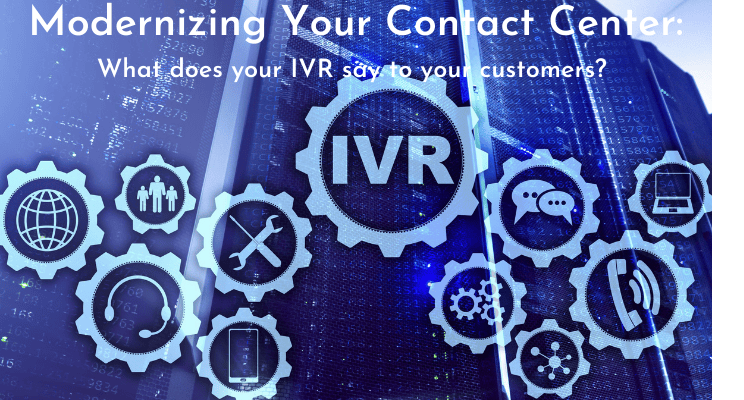
    What Does Your IVR Say to Your Customers?

    The IVR – it’s probably the technology with the worst reputation in the contact center. We all have our IVR horror stories – getting stuck in IVR “jail” where 0 does not get us to an agent, speech enabled IVRs that don’t understand what we are saying, being routed through menu after menu after menu just to get to an agent. According to this Forbes article by Shep Hyken, 39% of customers would rather clean a toilet than interact with an IVR to get their questions answered.

    Your IVR does not have to be a horror story, but rather can (and should) be a useful tool to enable your customers to get information & assistance quickly and enhance their customer experience. The key to a successful IVR implementation is to ensure that you focus on the design and execution for a customer-centric experience.

    As you work through your design, you want to balance automation and deflections with personalization and ease – customers are more likely to do business with a company that makes it easy. You should also look at your various personas that contact your company and their customer journeys – where in their customer journeys are they needing to contact you and why? Are there ways to reduce the need to contact you by proactively addressing areas of friction in the customer journey? Regardless of removing the areas of friction, inevitably customers will need to speak with your customer service department and leveraging an IVR can be an effective way to ensure that they get the assistance they need. Below are some guidelines when designing your IVR.

    1. Avoid Company jargon when routing – Build the IVR with your customer in mind – avoid company jargon, but rather think about how a customer would describe their needs. If you are uncertain, listen to your call recordings to capture the questions that customers are asking. For instance, instead of saying “For accounts payable” you could say “for questions about your invoice”. This will ensure a better customer experience and reduce the number of customers pressing 0 to speak with a customer service representative.
    2. Program open hours and closed hours with different treatments – Don’t force a customer to navigate an IVR during closed hours only to be told that you are closed when opting out to an agent. You can still provide self-service during closed hours while notifying a customer that the contact center is closed prior to routing them into self-service.
    3. Always allow a customer the option to speak with an agent – The IVR should not be a “gatekeeper” to prevent callers from speaking to an agent. Providing a great customer experience includes enabling the customer to do business with you in the channel of your choice. Preventing a customer from being able to speak to an agent may lead to a short-term “containment”, but could lead to a longer-term issue with customer churn and dissatisfaction.
    4. The IVR’s primary function is for routing, not reporting – While there is robust reporting in modern IVRs, do not create unnecessary options to get reasons why a customer is calling. This is not the most accurate way to get reasons for contacts – use contact dispositions for “reasons for contacts”, not the IVR.
    5. The IVR’s primary function is for routing, not marketing – Do not force customers to listen to marketing or unnecessary messaging in the IVR. In the year 2021, customers know that they could go to your website to look at FAQs or engage in digital interactions. However, they have selected to call you. Also, never, EVER, EVER use the phrase “Please listen carefully, our options have changed”in your IVR. This is like nails down a chalkboard – oftentimes these announcements play for weeks or months on end inadvertently and are not effective for the callers as callers have become immune to this phrase. If you want to show that your menu has changed for frequent callers, there are other ways you can achieve this such as using a different voice or slightly changing the greeting.
    6. Personalize the experience with integrations – What are all the customer touchpoints into your company? What are the top reasons that customers contact your customer service organization? Are there ways to make it easier to provide the customer this information without them speaking with an agent? Personalization is more than customer identification. Customer identification is the first step of personalization. Leverage your CRM, ERP, WMS and other systems to get the context as to why this customer may be contacting you – Did they place an order recently, but haven’t received it? Did they receive an invoice recently? Did they receive a marketing contact recently that they may be contacting you about? Curate the IVR experience with the customer in the center and the options dynamic to the customer’s needs based on the data and information you have in your business systems.
    7. Keep the menus short – Menus should be 5 options or less and should be no more than 30 seconds. Play the most frequent options first.
    8. Provide contextual information to the agent if the customer opts to speak with an agent. The customer does not want to have to repeat themselves – ensure that you provide the customer information and context from the IVR to the agent- this is a win/win for both the customer and agent. The customer won’t have to repeat themselves and it saves time for the agent.
    9. Testing & Tuning – Leverage your business partners and agents to test your IVR. They will be helpful in identifying where there could be potential customer friction and issues in routing that you may not have anticipated during your initial design. While designing, you have the best intentions with diagramming your call flows, but it definitely doesn’t take the place of user testing and then tuning where you can optimize the call flows. This is your opportunity to fine-tune the experience to make it even more customer centric.
    10. Continued Tuning of the IVR – After going live with your new IVR design, continue to look at reports and metrics for areas of opportunity. What is the IVR containment rate – is it higher or lower than anticipated? What percentage of callers are pressing 0 & why? Are you able to identify a high percentage of customers – if not, how can you remediate this? Do the options that the customers are choosing match the disposition for the reason for contact? If not, there may be opportunities for additional tuning of the IVR experience. What is your transfer rate after going live – is it better or worse than before? Look at ways you can improve the customer experience in the IVR to drive down transfers.

    The IVR can be a useful tool in routing and self-service. By providing a dynamic, personalized IVR experience for the customer that is useful and easy will enhance the overall customer experience. This will lead to higher customer loyalty and stickiness.

  • Is Your Toll-free Number Providing Value?

    Is Your Toll-free Number Providing Value?

    This is the first of a series of articles on modernizing your contact center. We will explore various aspects of the contact center, focusing on modernizing your contact center and optimizing the customer & employee experience. Let’s start at the beginning, when contact centers were merely call centers and your toll-free number was your brand.

    The toll-free number was introduced in 1967 by AT&T, was expensive, and was only utilized by the largest companies. Toll-free numbers really didn’t gain popularity until the mid-eighties and early nineties when other telco carriers were able to offer the service, and number portability was introduced, allowing you to move your toll-free numbers to any carrier. During that time, before the internet, customers were calling from landlines and long distance costs were relatively high. Toll-free numbers were introduced to enable the customer to call without having to incur long distance charges and thus were a way to build “stickiness” with the brand, encouraging customers to call to order or get service.

    In the early nineties, vanity numbers were introduced and gained popularity. Up until 1996, only 1-800 was used for toll-free calling. However, with the gain in popularity and large number of toll-free numbers in use, 888, 877, 866 were all opened up in the next 3 years. Companies could leverage hundreds of toll-free numbers to provide different customer experiences based on the number dialed. The routing and management of these toll-free numbers can lead to complexity which could result in high administrative costs for managing the routing and could potentially detract from the overall customer experience if there were errors in the routing.

    A lot has changed since toll-free numbers were introduced. Since 2016, the number of cell phone only households has exceeded the number of landline households. Keeping in mind that cell phones do not incur long distance charges, you have to ask yourself, “What are the benefits of maintaining your toll-free numbers?”

    Landlines vs. mobile phones

    Toll-free numbers and the associated usage and feature charges can cost a company tens of thousands to hundreds of thousands of dollars per year. A company’s brand is no longer phone number based but rather URL based — customers predominantly go digital/web first for information. Could you drive down your overall operational costs and maintain customer experience and stickiness if you were to eliminate your toll-free numbers? Granted, with such a change, change management during the transition to drive user adoption is critical.

    Phone is still an important channel. According to “The State of Customer Experience: 2020 Business and Customer Service Trends” by The Northridge Group, phone is still the most popular channel (42% of customers prefer it). However, the preference for phone has declined over the last 5 years. Keep in mind, there are other ways to engage with your customers via phone – whether it is click to dial from the website, publishing a local numbers or utilizing the call me now feature. Cloud providers, such as RingCentral, do not charge transport charges for any local or long distance call which could result in significant annual savings for your company. As you review your modernization strategy, I challenge you to ask yourself why you are leveraging toll-free numbers. If the answer is “this is how we have always done it” then there is an opportunity to drive down costs without negatively impacting customer experience by moving away from toll-free numbers.

  • CX & Social Work: Unexpected Common Themes

    CX & Social Work: Unexpected Common Themes

    I didn’t go to college for Customer Experience. In fact, I didn’t even have a business degree on my radar when I went to school. I knew I wanted to help people so I started college thinking I wanted to be a doctor. After the first year of college with a declared major in pre-med, I got antsy and decided that the amount of time that it would take to be a doctor and the number of Chemistry classes I would need to take didn’t appeal to me. Knowing that I still wanted to help people, I changed my major to Psychology with the goal of being a social worker after graduating from college. After a couple years of being a social worker at the Division of Family services, I realized what a sheltered life I led growing up and that I would burn out quickly as I wasn’t able to make the changes that I had envisioned making for the children and families in my caseload.

    I left the field soon and started a career in telecom and then quickly focused on contact centers and customer experience. I realized this was my passion and where I wanted to focus my career. I am grateful for the experience of being a Social Worker, but was really excited when I found my niche and passion. Recently I reflected on that work and realized that there were common themes between being a Social Worker and working in Customer Experience. In fact, I would even go as far of both are really focused on improving experience — in the case of social work, the child and family are the “customers”. This article reviews a few of the common themes.

    Put the individual (customer) at the center of everything you do

    Social Work: It was time for a court hearing for one of the teenagers that was relatively new in my caseload, but already I knew that I needed to recommend a change in placement for this teenager. He had been in the care of the state for several years, but weren’t getting the treatment necessary to be able to work through some of his challenges and reunification with the family wasn’t possible yet. I was cautioned by my supervisor and the legal teams that the judge was very opposed to moving this child as he had been moved a number of times already. While I agreed that he needed stability and a place he could call home, I also knew that in order to get the help he needed, he had to be moved once more where we could focus on therapy and permanence.

    Knowing that I had an uphill battle ahead of me with recommending a change in placement, I knew I couldn’t write the typical court report of providing an update on the child since the last court hearing. That evening I read through 4 very thick binders of all the case notes on this teenager. I created a timeline of events and wrote a comprehensive court report that outlined all the challenges and changes this teenager had encountered and why I was recommending one more move – hoping that this would provide enough context to convince the judge and others on the team to move forward with the change in placement. Later that week, during the court hearing, the judge ruled to move that child based on these recommendations due to the report that had been filed. I was elated that this child was going to be on the road to stability and permanence.

    Customer Experience: When thinking about creating new customer experiences or refining/improving the ones you have, keep your customers at the center of the design. Customer-centricity is important to remove friction points in your customer journeys as well as thinking about new engagement methods. Many companies are embracing design thinking when focusing on their customer experience journeys – anticipating customers’ wants & needs to design better customer-focused solutions. This Forbes article outlines some ideas on customer-centric design including empathetic design – allowing businesses see problems from the customer’s point of view rather than from the company’s capabilities and beliefs. How do you create that personalized experience for your customers? A couple of methods that have worked well for me include customer journey mapping & customer research using immersion techniques.

    Customer Journey mapping is a visual representation of how the customer interacts with your product and company through the eyes of your customer – focusing on the journey of each persona. This is a great blog on the top 10 requirements of customer journey maps. I have participated and led a number of customer journey mapping sessions as well as led initiatives to improve the customer journey based on the journey maps. Two key areas that I focused on were the customer emotions during the journey as well as the customer touchpoints. Where was the customer frustrated or had negative experiences with our brand and how could we proactively address those? Where did the customer have to reach out and was it a positive or negative experience. If they had to reach out and it was a negative experience or unnecessary, I would focus on ways to reduce those touchpoints.

    Customer Research using immersion: When taking a look at customer experience, it is better to take a look at the experience as being immersed in the customer experience rather than researching it from focus groups, survey data and data on current behavior. While data and feedback are important in evaluating the customer experience, going through the journey as the customer is also important. When immersing yourself in the customer experience, you go through the various customer journeys in the eyes of the customer and validate whether your documented journey is correct. Go through not only your company’s journeys, but also competitors journeys – what do they do better? What do you do better? What do the customers expect? Where you are falling short? Ensure you look at these experiences through the various personas and eliminate bias where possible.

    In addition to understanding your customer journeys, it is critical to have technology to support personalization. This includes having your omni-channel contact center platform connected to your CRM and back-office platforms. You should offer a variety of channels for customers to be able to contact you on, automatically identify them, and anticipate their needs based on their prior interactions with the company.

    Build Trust while Practicing Empathy & Compassion

    Social Work: One of my most memorable days as a social worker was the day I got called to pick up a newborn at the hospital. He had tested positive for drugs, so I needed to go to the hospital to take custody of the newborn. Walking into the mother’s hospital room and having her hand over her newborn baby was heart wrenching. Over the course of the next several months, I got to know this mother and tried putting myself in her shoes. She had a pattern of using drugs but wanted to get clean to gain back custody of her baby. After being released from jail, she found housing, went to treatment and agreed to random drug testing. She worked hard with the goal of being reunified with her son – consistently showing for many months that she was working her program and maintaining sobriety.

    I also thought about her son’s future – I knew that there was a chance that she may start using again. That said, we needed to give her a chance and show her that we had confidence in her based on her commitment to treatment and sobriety – the ultimate goal for social work is reunifying families. After the mother proved several months of sobriety, I made the recommendation to place the son back with his mother with supervision from the state to continue to monitor progress. That day, after the court hearing where the mother was awarded custody, I talked to her letting her know that I knew that her intentions were in the right spot, but if she ever considered using drugs or ever started using drugs to contact me day or night as we both wanted what was best for her son. I gave her my mobile number, my pager number and my office number. I had regular visits and stayed in contact with the mother After several months, I got that dreaded call – she had used and was asking me to come pick up her son. I got her location and immediately went to pick up her son. While heartbreaking, I was grateful for the trust we had fostered – she knew I wouldn’t bring the police and my goal was that her son would be safe. I picked up her son and placed him in a foster home where he could be cared for.

    Customer Experience: Trust has emerged as an important trend in customer experience – customers expect it, but often-times companies fall short. That said, companies can start building trust by showing empathy and compassion. Customers want to ensure that companies are transparent. If there is an issue with a customer’s shipment (I’m sure we all experienced this during the holidays with at least one retailer) in which the package was not going to arrive on time, proactively let the customer know to change their expectations and offer ways to correct the issue (such as reshipping overnight if necessary). Another way to build trust through empathy is through customer surveys. Building a “Voice of Customer” program in which is customer centric – taking the feedback and addressing the customer’s concerns as well as providing an update on the actions taken to build trust and loyalty.

    Covid-19 has highlighted the need for empathy and compassion. As a result, companies who have responded to their customer’s expectations have been able to build trust and ultimately increased market share. Examples include companies who shifted their production to PPE manufacturing in the early months of the pandemic when there was a shortage, curbside pickup for customers to remain safe, as well as financial institutions working with customers on flexible loan payments when they were being furloughed. Companies who responded to the new needs of the customer due to the health crisis ultimately built trust and loyalty with their customers which ultimately built customer confidence in their brand.

    Always be Available

    Social Work: There were many evenings I took calls from residential care facilities, foster parents, children in my caseload or other stakeholders in one of the cases I was handling. It could be something like a foster parent who was frustrated and needed to vent and get pointers on parenting or a child that was asking about their parents. One particular example was a teenager, 17 years old, who was in the state’s custody. His parents’ rights had been terminated many years before and he had been in state custody for several years. Leading up to this particular interaction, he had witnessed the murder of his girlfriend and was a key witness in the case. The days and weeks leading up to the trial were heart wrenching. We would go to the prosecutor’s office and look at crime scene photos and practice questioning him so he would be prepared to be a witness. On the day the trial was scheduled to begin, I picked out my outfit, a navy blue suit, and went to pick up this teenager and take him to court. Right away I could tell he was agitated and upset. I knew this day would be emotional but felt that there was something more there. I asked him on the way to court if he wanted to talk and he didn’t answer. After arriving, we were dismissed, as the accused had accepted a plea deal. I was relieved the teenager didn’t have to take the stand and be the witness, but I could still tell that something was really bothering him. As I dropped him off, I told him if he wanted to talk about anything, to give me a call. Later that evening, he called me with his counselor at his house. He was upset that I showed up in a navy blue suit. The murder was gang related and I was wearing the color of the enemy. I apologized profusely and admitted to my naivety. Being available in the moment, showing that I cared and admitting to being naïve, ensured that emotions did not continue to fester and I could diffuse the situation.

    Customer Experience: As e-commerce and digital communication have become the norms, customers expectations on how and when to engage with these companies have changed. The “always-on” customer expects for companies to be available and provide an always-on customer experience. What does this look like? First would be an always-on omni-channel customer engagement – offering up multiple channels to meet the customers needs “in the moment”. This may include multiple channels such as chat, in-app messaging, phone, FAQs, social media and video to name a few. Augmenting the channels with AI and automation will enable the customer to self-serve and escalate to an agent if automation does not effectively address their inquiry. At each step of the customer journey, look for ways to drive down costs, improve customer satisfaction and differentiate your company. Being where your customer at any time of day (or night) is going to strengthen the connection between your customer and your company.

    Summing it Up

    While the stories I shared with you today with my experience in social work and customer experience may be very different contextually, there are common themes. The common themes are a result of focusing on the person and how you can improve their experiences – whether it is with their way of life and family experience (either biological or foster/adopted) or whether it is with various companies. I am looking forward to sharing more about trends in customer experience in upcoming articles & blogs.