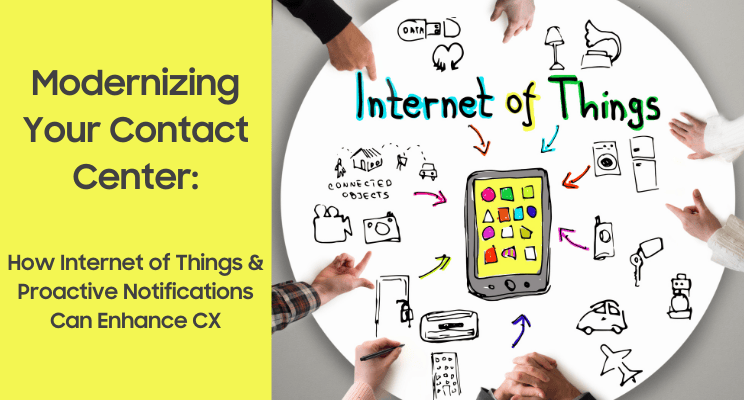
We live in a connected world. There were 22 billion devices connected to the internet in 2018 and it is projected to grow to 38.6 billion in 2025 and 50 billion in 2030 (Statista). To put that into perspective, there are currently 7.9 billion people in the world today and it is projected to grow to 8.2 billion by 2025 and 8.5 billion in 2030 (Worldometer). By 2030, it is projected that each person has approximately 9 connected devices!
Have you ever stopped and thought about how many devices you own that are connected to the internet? My family of 7 has 32 devices that are or can be connected to the internet. This includes TVs, gaming consoles, mobile phones, tablets, vacuums and interactive voice assistants. I can check my phone and see where my family is. I can see how long they have been there and how fast they are going. We haven’t adopted smart home technology yet (such as connected lights, doorbell, thermostat, etc.) and our cars are not connected.
Having all this data at my fingertips enables me to be connected and provides convenience. I am excited to think about all the ways customer experience can be enhanced by leveraging IoT and proactive notifications. People are busy and customers want frictionless experiences. When companies make the experience effortless (or low effort), customers are 94% more likely to repurchase and 88% more likely to spend more with your company (Customer Experience Board). IoT can enable an effortless experience as well as drive down contacts into your contact center.
Proactive notifications are a part of providing a frictionless experience. 85% of consumers want to receive proactive notifications (Nuance). 70% of consumers view brands that send proactive notifications more favorably (Statista). A connected world enables companies to gain more insights and therefore, proactively reach out.
Examples of IoT coupled with proactive notifications
A Connected Car with Service Reminders
That pesky light on the dash comes on to remind you your car needs an oil change. Imagine if you had a much more conversational reminder for car maintenance. For instance, based on mileage, you could get a proactive reminder sent to your phone not only for your oil change. You could receive a notification that it’s time to rotate your tires with useful information on how this will prolong the life of your tires and maintains your tire warranty. Taking it one step further, the reminder should offer you available appointments for your tire shop for that rotation.
The check engine light comes on and you don’t know whether you should call your mechanic immediately or if it is safe to wait for a little bit before taking your car in. Imagine, by having a connected car, that the code associated with that light comes on. It alerts you that you have a faulty O2 sensor and that you should get that checked on the next maintenance appointment. It also sends a notification to your mechanic on record to check that during the next maintenance appointment with the information associated with the fault.
A Connected Home with Conversational Proactive Alerts
You have your home sprinkler system scheduled to turn on every morning at 5 AM. However, there is a 100% chance of rain one day during the week. Your sprinkler system sends you an alert that it is supposed to rain and asks you if you would like to turn off your sprinkler that day. Taking it one step further, it shows you the environmental impact of how much water you saved by turning it off for that day.
Your furnace has malfunctioned and your thermostat notices that it is not able to keep your house at the preprogrammed temperature. It proactively alerts both you and your HVAC company of the issue. Your HVAC company is able to remotely access your furnace and diagnose the issue and sends you a notification that a technician needs to visit your home and correct the issue and provides you with the next appointment time which you are able to confirm or contact them for alternative times. This was all done before you noticed the temperature dropping in the home.
Additional Examples of Proactive Alerts
The internet goes out in your neighborhood. Your internet provider detects the issue and proactively notifies all the customers of the internet outage as well as the estimated time for restoral.
You have scheduled installation of new internet service at your house. However, the technician is running late. Since they are in a connected vehicle, an alert is sent that they will be late to the service call. The Internet service provider has scheduling software that automatically looks for other available technicians in your area that could possibly service you faster and reroutes another technician to your home. You are proactively notified that the technician is running late and provides a new ETA with a link to check on where your technician is en-route.
Summary
Compare these examples to what you experience today. How many times have you had these sorts of effortless reminders? Unfortunately, these are not the norms. Reactive customer service is still the norm. As a consumer, these experience are often frustrating. Think about the customer experience you provide as a company. Where can you leverage IoT and proactive notifications to make it easier for your customers? By leveraging proactive notifications, you can increase customer satisfaction, loyalty and revenue as well as decrease operational costs.

