Twenty-two years ago, I had absolutely no idea how to cook a turkey, much less prepare an entire Thanksgiving dinner.
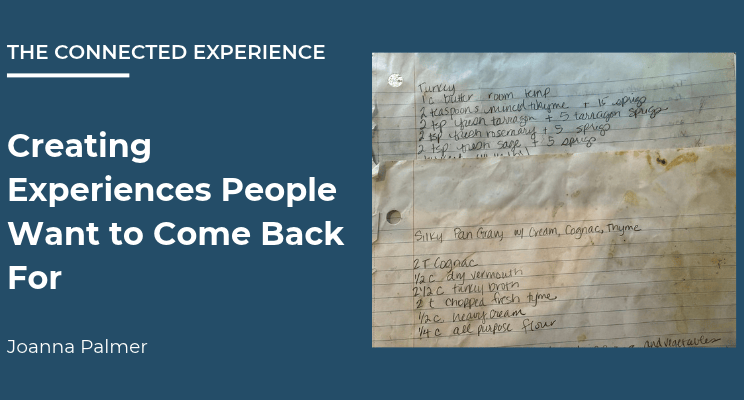
I had an insert from the Kansas City Star that included holiday recipes. I used those recipes to learn how to make a turkey and gravy, and to this day, I still use those same recipes. The handwritten recipes are stained and tattered, but they remain the foundation of our Thanksgiving meal.
When I decided to start hosting, my oldest daughter was almost 2 years old, and I wanted to create positive, lasting memories for her. I remember going to my parents’ house for Thanksgiving and how noticeably stressed my mom would be preparing a large meal for our extended family. I wanted to remove that stress for her and create lasting positive memories for future Thanksgivings.
For me, preparing a large family dinner is something I genuinely enjoy. I find it relaxing, and I wanted to create an experience where everyone could come together, enjoy great food, have fun and make memories.
My oldest daughter is now 23, and my family lovingly refer to Thanksgiving as “our Super Bowl.” It has become a day that both family and friends look forward to every year. As the kids have gotten older, they have started bringing their significant others and friends. Everyone knows they are welcome, and regardless of how many people show up, there will be plenty of food.
Thanksgiving is my favorite holiday. It’s about connections, relationships and creating an experience that people want to come back for.
And isn’t that ultimately what we are trying to accomplish with customer experience?
Start With the Experience You Want to Create
When I started hosting Thanksgiving, my objective wasn’t simply to serve dinner. If that had been the goal, there certainly would have been easier and more efficient ways to accomplish it.
My objective was to create an experience.
There is an important distinction between the two, and I think it’s one that organizations sometimes lose sight of as they embark on customer experience and AI transformation initiatives.
We spend a tremendous amount of time discussing how many interactions we can automate, how we can reduce our cost to serve, how we can improve employee productivity and how we can increase self-service containment.
These are all legitimate business objectives. Organizations need to operate efficiently, and AI presents significant opportunities to accomplish this.
But what if we started with a different set of questions?
- What do we want our customers to experience?
- What do our customers already value about doing business with us?
- What could we do to make their lives easier?
- What would make them choose to do business with us again?
- What experiences are we not delivering today that AI could make possible?
The answers to these questions might fundamentally change how we approach our AI investments, prioritize use cases and measure success.
Preserve What’s Working
Over the years, my Thanksgiving menu has evolved. I’ve discovered new recipes on Pinterest, incorporated a green bean casserole recipe from a Campbell’s soup cookbook and added to the meal as our family has grown.
But those original turkey and gravy recipes? They aren’t going anywhere.
There are undoubtedly thousands of turkey recipes available online today. I could ask AI to recommend a new recipe, identify a more efficient cooking method or suggest an entirely different approach to preparing Thanksgiving dinner.
But why would I change something that works so well and has become part of what people look forward to every year?
I don’t need to reinvent the entire meal to make the experience better. There is a similar lesson for organizations embarking on transformation.
When we introduce new technology, particularly something as transformative as AI, there can be a tendency to focus on what we can replace rather than what we should preserve.
Before redesigning a customer journey, automating an interaction or changing an established process, we should understand what is working well today and why.
Perhaps it’s the expertise of a tenured employee who knows how to navigate complex customer situations. Perhaps it’s a personal interaction that differentiates your organization from its competitors. Perhaps it’s a process that, while not particularly sophisticated from a technology perspective, consistently delivers an exceptional customer outcome.
These are assets that should inform your transformation strategy, not become unintended casualties of it.
This is where AI can play a particularly interesting role. We can use conversational intelligence to understand not only where customer interactions are going wrong, but also what is happening when they go exceptionally well.
What are our most successful employees doing differently? What experiences are customers responding positively to? How can we make those experiences available to more customers?
Sometimes the greatest opportunity for transformation isn’t creating something entirely new. It’s taking what we already do exceptionally well and finding ways to deliver it more consistently and at scale.
Transformation doesn’t require us to abandon what works. It gives us an opportunity to build upon it.
Anticipating Needs Rather Than Simply Responding to Them
One of the things our friends and family know about Thanksgiving at our house is that there will always be enough food. They don’t need to worry about whether there is room for another person or whether bringing a friend will create an inconvenience. Everyone is welcome.
As organizations, how often do we design experiences around anticipating our customers’ needs rather than simply responding to them?
A customer whose flight has been canceled shouldn’t necessarily have to contact an airline to understand their options for getting home.
A hotel guest traveling with their family may have very different needs than that same guest traveling for business, even though their customer profile hasn’t changed.
A customer purchasing a new piece of technology may benefit from proactive guidance on setup and installation rather than having to contact technical support when something goes wrong.
AI gives us an opportunity to better understand context, anticipate needs and deliver experiences that historically would have been difficult or expensive to provide at scale.
Yet much of the conversation around AI remains focused on handling the interactions we already have, rather than reimagining the experiences we could create.
There is a significant opportunity in that distinction.
Consistency Doesn’t Mean Everything Has to Stay the Same
Our Thanksgiving gatherings look very different today than they did 22 years ago. The kids have grown up, new people have joined us, and the dynamics of the day have changed.
The experience has evolved alongside the people who participate in it.
But there are certain things everyone has come to expect. They know they will be welcomed, there will be great food, and it will be a day filled with family, friends and fun.
That consistency is part of what makes the tradition special.
The same is true in customer experience.
Customers develop expectations based on their previous interactions with an organization. When those expectations are consistently met, trust grows.
But consistency doesn’t mean delivering the exact same experience to every customer or expecting customers to have the same needs they had five years ago.
One of the most compelling opportunities with AI is its ability to help organizations deliver greater consistency while adapting to the individual needs and circumstances of their customers.
Imagine employees having access to the right information at the right time, regardless of their tenure. Imagine customers being able to move between digital and human-assisted channels without having to start their conversation over. Imagine an organization understanding the context of a customer’s needs rather than treating every interaction as an isolated transaction.
These capabilities are about much more than operational efficiency. They are about creating confidence in the experience a customer can expect from your organization while allowing that experience to evolve.
Efficiency Should Enable a Better Experience
If my primary objective for Thanksgiving were to minimize the amount of time I spend preparing dinner, reduce the cost per person and eliminate unnecessary activities, I could certainly redesign the day.
I could simplify the menu, limit the number of guests and shorten the gathering.
By those measures, Thanksgiving might become considerably more efficient.
But would it still be our Super Bowl?
Definitely not. Imagine if I served canned gravy instead of the homemade gravy that people talk about year round! There would be a revolt!
That doesn’t mean I shouldn’t look for ways to make preparation easier. If something allows me to spend less time on a repetitive task and more time enjoying the day with family and friends, that’s a win. I have started preparing more of the food in advance so things are not so frantic in the kitchen when guests arrive.
The important thing is that efficiency serves the experience rather than becoming the experience.
What if, in addition to reducing operational costs, we used AI to:
- Give employees more time to focus on complex customer needs and meaningful conversations.
- Provide personalized experiences that previously weren’t economically feasible.
- Identify recurring customer frustrations and address their root causes.
- Create proactive experiences that eliminate the need for customers to seek assistance.
- Uncover unmet customer needs and opportunities to deliver additional value.
There is a difference between using AI to do what we do today at a lower cost and using AI to create something better than what exists today.
Organizations should be exploring both.
Are We Measuring What Really Matters?
I don’t measure the success of Thanksgiving by how quickly everyone eats, how much food is consumed per person or how efficiently I clean the kitchen.
I measure it by the experience people have.
Did everyone feel welcome? Did they enjoy themselves? Did we create new memories? Are they looking forward to coming back next year?
As organizations invest in AI, we need to be equally thoughtful about how we define success.
A reduction in average handle time doesn’t necessarily mean a customer had a better experience. An increase in containment doesn’t necessarily mean a customer’s issue was resolved. A reduction in contact volume doesn’t necessarily mean customers are happier.
We need to connect operational improvements to meaningful customer and business outcomes.
Are customers making less effort to accomplish what they need? Are we resolving issues more effectively? Are we strengthening customer relationships? Are customers choosing to stay with us, purchase more from us and recommend us to others?
And just as importantly, are we preserving the things that made our customers choose us in the first place?
These are the outcomes that help us understand whether we are truly transforming the customer experience.
Creating Experiences Worth Coming Back For
This week, I’ll once again pull out those stained and tattered turkey and gravy recipes. I’ll reference some recipes on Pinterest and pull out others from cookbooks I’ve had for years.
Some of what I’ll prepare is exactly what I prepared two decades ago. Other things have been added along the way.
It’s a combination of the old and the new, each contributing something to the overall experience.
I think that’s a useful way to think about transformation.
As you evaluate your organization’s AI transformation strategy, consider four questions:
- What experiences are worth preserving?
- Where are there opportunities to make those experiences even better?
- What new experiences can we create that weren’t possible before?
- How will we know whether we’ve made a meaningful difference for our customers?
The goal shouldn’t simply be to create a more efficient version of the experience we deliver today. It should be to create an experience our customers want to come back for.
Technology will continue to evolve. Customer expectations will change. New capabilities will emerge that we haven’t even considered yet.
Not everything needs to change. Sometimes, the foundation of a great experience is already there. We just need to recognize it, protect it and build upon it.
This Thanksgiving, I’m grateful for the connections, relationships and memories that have been created around our table over the years, and for the opportunity to continue creating them.
Happy Thanksgiving!